Claim Your FREE Website Audit—Limited Time Offer | Contact Us NOW!

Sikdar Technologies Academy

Skills for IT jobs in 2026 for students
Sikdar Technologies Academy

10 IT Skills for Students in 2026 to Get Job-Ready

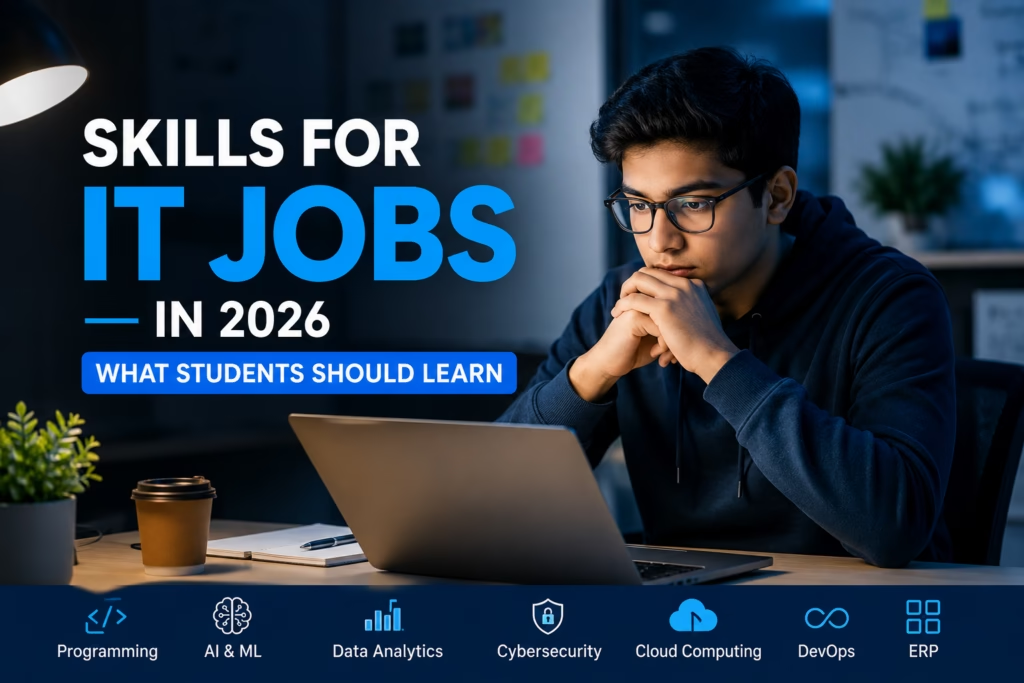
IT Career Guide · 2026 Skills for IT Jobs in 2026: What Students Should Learn The technology job market is changing quickly. Students need more than a degree or a collection of certificates. They need practical technical skills, problem-solving ability, project experience and a clear understanding of the career direction they want to pursue. This guide explains the most useful skills for IT jobs in 2026 and shows how students can turn classroom learning into practical career preparation. Sikdar Technologies Academy Updated 2026 Career & Skills 15 min read 2026 CAREER FORMULA READY → 01 Choose a Direction Identify the technology field that matches your interests. 02 Build Core Skills Learn the technical foundation required for that path. 03 Build Projects Turn your knowledge into practical work you can demonstrate. 04 Gain Experience Develop professional exposure through practical opportunities. Quick Answer What skills should students learn for IT jobs in 2026? Students preparing for IT jobs in 2026 should build a combination of technical and professional skills. Programming, databases, artificial intelligence, data analytics, cybersecurity, cloud computing, DevOps, ERP and communication can support different technology career paths. The practical approach Do not try to learn every technology at the same time. Choose one career direction, learn its core skills, build practical projects and then add supporting technologies. Who This Guide Is For Planning your IT career while you are still a student? The earlier you understand your options, the easier it becomes to choose useful skills and avoid spending months learning technologies that do not match your career goals. 01 · ENGINEERING Computer Science Students Build practical skills alongside your academic subjects and start developing projects before graduation. 02 · COLLEGE Students Exploring IT Compare technology paths and identify the type of technical work that interests you most. 03 · FRESHERS Recent Graduates Strengthen your technical profile with projects, practical skills and relevant experience. 01 · Core IT Skills The technical foundation students should build first. Technology changes rapidly, but strong fundamentals remain useful. Students should understand programming logic, data, software tools and problem-solving before moving into advanced specialisations. 01 Programming Learn one programming language properly. Focus on variables, functions, logic, data structures, debugging and clean code. 02 SQL & Databases Understand tables, relationships, queries, joins and how applications store and retrieve information. 03 Git & Version Control Learn repositories, commits, branches and collaborative development so your projects follow a professional workflow. 04 Problem Solving Practice breaking large problems into smaller steps and developing solutions instead of depending entirely on tutorials. 05 AI Literacy Understand how modern AI tools can support development, research and productivity while maintaining responsible usage. 06 Communication Learn to explain technical concepts, projects and decisions clearly during interviews, presentations and professional discussions. 02 · Career Paths Popular IT career directions students can explore in 2026. There is no single route into the technology industry. Your best choice depends on the type of problems you enjoy solving and the skills you are willing to develop consistently. 01 Software Development Software development is suitable for students who enjoy programming and building applications. Start with programming fundamentals, databases, version control and APIs before specialising in a development stack. Programming Web Development APIs Git SQL 02 Artificial Intelligence & Machine Learning AI and machine learning combine programming, data and analytical thinking. Students should develop programming and data fundamentals before moving into advanced machine learning concepts. Python Data Machine Learning AI Tools 03 Data Analytics Data analytics focuses on turning information into useful insights. Students can begin with spreadsheets, SQL, statistics and data visualisation before exploring advanced analytics. SQL Statistics Analytics Visualisation 04 Cybersecurity Cybersecurity requires an understanding of networks, operating systems and security principles. Students should build a strong technical foundation before exploring specialised security areas. Networking Linux Security Systems 05 Cloud & DevOps Cloud and DevOps involve infrastructure, deployment, automation and reliable software delivery. Linux, networking and version control are useful starting points. Linux Cloud Docker Automation 06 ERP & Enterprise Technology ERP connects technology with real business processes such as finance, sales, supply chain, manufacturing and human resources. This path can suit students interested in both technology and business operations. ERP SAP Odoo Business Processes 03 · Learning Strategy A better way to learn technology skills. Completing courses is only one part of career preparation. A stronger learning process connects knowledge with application. STEP 01 Learn Understand the concept and learn why the technology is used. STEP 02 Practice Solve exercises and small problems without copying every solution. STEP 03 Build Use your knowledge to create a practical project. STEP 04 Explain Learn to explain your project, decisions and results clearly. 04 · Career Preparation Skills vs certificates: what should students focus on? Certificates can demonstrate structured learning. Practical skills demonstrate what you can actually do. A strong student profile can combine both with projects and relevant experience. Certificates Can Show Completion of a structured program Exposure to a specific subject Commitment to learning Understanding of a defined curriculum Practical Work Can Show Ability to apply concepts Problem-solving ability Project development experience Ability to explain technical decisions 05 · Project Portfolio Build projects that prove you can apply your skills. A project does not need to be enormous. It should solve a clear problem and demonstrate how you use technology to create a working solution. BEGINNER PROJECT Student Management System Create an application that manages student information and demonstrates database and application development concepts. CRUD operations Database integration Search and filtering Form validation DATA PROJECT Business Analytics Dashboard Turn a dataset into a useful dashboard that communicates trends and business information. Data cleaning SQL queries Visualisation Business insights AI PROJECT AI-Powered Application Build a practical application that uses an AI capability to solve a clearly defined user problem. AI integration Application logic Prompt design User experience ENTERPRISE PROJECT ERP Business Workflow Demonstrate how technology can support a real business process through an enterprise workflow. Business process mapping ERP workflow Data management Reporting 06 · Practical Experience Why practical

google.com, pub-8966458381222183, DIRECT, f08c47fec0942fa0
Sikdar Technologies Academy

Skills for IT Jobs in 2026: What Students Should Learn

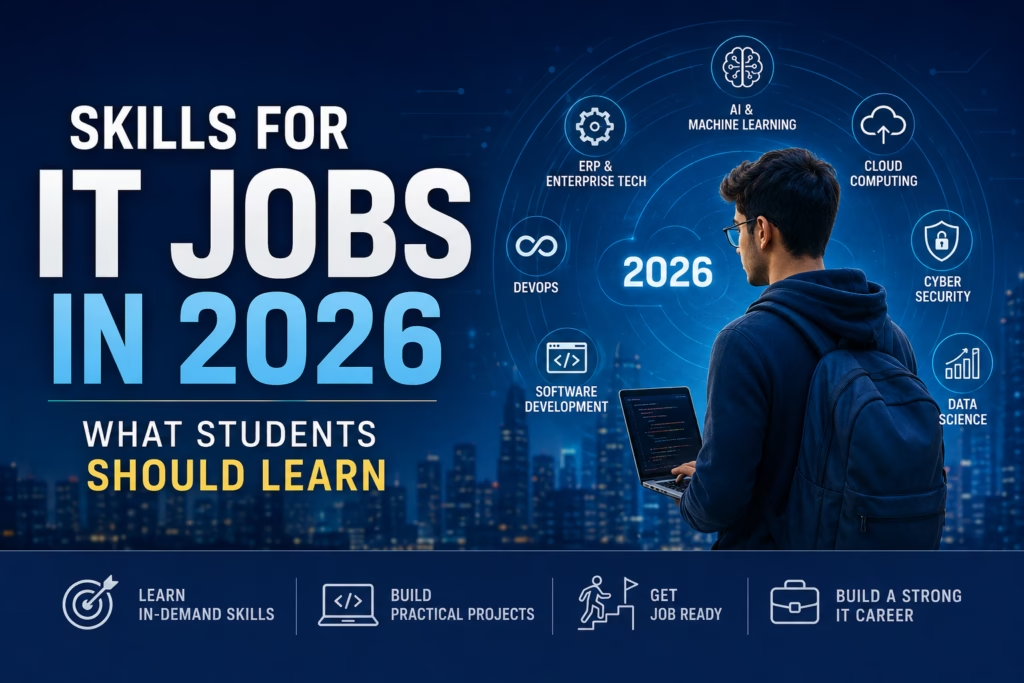
IT Career Guide · 2026 Skills for IT Jobs in 2026: What Students Should Learn The skills for IT jobs in 2026 are changing as companies adopt artificial intelligence, cloud platforms, cybersecurity tools, data systems and business software. A computer science degree still provides a strong foundation, but students also need practical skills that they can demonstrate through projects, internships and real-world problem solving. This guide explains what students should learn, which technical skills matter most, how to choose a career direction and how to build a practical learning plan without trying to learn every technology at once. By Sikdar Technologies Academy • Updated August 2026 • Career & Skills Start Here What skills do students need for IT jobs in 2026? Technology careers are no longer limited to traditional software development. Companies now hire people for artificial intelligence, data, cloud computing, cybersecurity, enterprise applications, DevOps and many other technology functions. Therefore, choosing a career direction early can make learning more focused. Instead of collecting certificates without practice, students can build a combination of technical knowledge, projects, communication ability and problem-solving skills. The most useful approach is simple: understand the role first, identify the required skills, learn the fundamentals and then prove those skills through practical work. Important: You do not need to master every technology in the IT industry. A focused skill set with strong fundamentals is usually more useful than a long list of unrelated tools. Career Paths Six technology career directions students can explore Each career path has different technical requirements. However, programming fundamentals, logical thinking, communication and practical experience remain useful across almost every direction. 01 / ARTIFICIAL INTELLIGENCE AI & Machine Learning Artificial intelligence is becoming part of software, business operations and digital products. Students interested in this field should begin with Python, mathematics, statistics, data handling and machine learning concepts. 02 / SOFTWARE Software Development Software development remains one of the broadest technology career paths. Students should understand programming, databases, APIs, version control, testing and software development practices. 03 / DATA Data Science & Analytics Data roles combine statistics, programming and business thinking. SQL, Python, data visualisation and analytical reasoning are valuable starting points for this direction. 04 / SECURITY Cybersecurity Security professionals help organisations protect systems, networks, applications and information. Networking, operating systems, security principles and practical labs create a strong foundation. 05 / CLOUD Cloud & DevOps Modern applications depend heavily on cloud infrastructure. Students can learn Linux, networking, containers, cloud concepts, automation and deployment workflows. 06 / ENTERPRISE ERP & Business Technology Enterprise technology connects software with finance, supply chain, sales, operations and other business processes. ERP knowledge can be useful for students who enjoy both technology and business workflows. Core Foundation 10 essential skills for IT jobs in 2026 Before choosing a specialised technology, students should develop a strong technical foundation. These skills support multiple IT career paths and make it easier to learn new tools later. Programming fundamentals — Learn variables, conditions, loops, functions, data structures and basic problem solving. SQL and databases — Understand how applications store, retrieve and manage information. Git and version control — Learn how developers manage code, collaborate and track changes. APIs and web fundamentals — Understand how modern applications communicate with services. Linux basics — Learn commands, files, permissions, processes and basic server concepts. Cloud fundamentals — Understand computing, storage, networking and deployment in cloud environments. Cybersecurity awareness — Learn authentication, access control, common vulnerabilities and secure practices. Data analysis — Develop the ability to clean, understand and communicate information from datasets. AI literacy — Understand how AI tools work at a practical level and learn how to use them responsibly. Communication — Explain technical ideas clearly to teammates, clients and non-technical stakeholders. Technical Skills Which programming skills should students learn? Programming is still one of the most useful foundations for an IT career. However, students should avoid learning several languages at the same time without understanding the basics. A better strategy is to select one primary language and use it to build small applications. Python can be useful for AI, automation, data and general programming. JavaScript is important for web development. Java and other languages are also relevant in many enterprise and application development environments. Focus on concepts before tools Regardless of the language, learn variables, functions, conditions, loops, data structures, error handling and object-oriented concepts. After that, practise by building projects rather than watching tutorials continuously. For example, a beginner can create a student management system, expense tracker or simple business application. Such projects make programming concepts easier to remember because every feature solves a practical problem. AI Skills AI skills every technology student should understand Artificial intelligence is influencing how software is developed, analysed and used. As a result, AI literacy is becoming useful even for students who do not plan to become machine learning engineers. Start with practical AI knowledge Students can begin by understanding machine learning basics, datasets, model training, evaluation and responsible AI use. Python provides a practical entry point for many AI and data workflows. In addition, students should learn how to work with AI-assisted development tools. The important goal is not simply generating code. Instead, students should understand the code, test the result and identify mistakes. Career tip: AI should strengthen your existing technical skills. It should not replace the need to understand programming, databases, security or software fundamentals. Specialisation Cloud, cybersecurity and data skills Beyond programming, several technology areas deserve attention. Cloud platforms support modern applications, cybersecurity protects digital systems and data skills help organisations make better decisions. Cloud computing Begin with servers, networking, storage and deployment concepts. Then move into containers, cloud services and automation. Hands-on practice is especially useful because cloud concepts become clearer when students deploy something themselves. Cybersecurity Networking and operating systems are strong starting points for cybersecurity. Students should also understand authentication, permissions, encryption, common vulnerabilities and secure coding. Ethical practice is essential throughout security learning. Data and analytics SQL is one of the most practical data skills.

google.com, pub-8966458381222183, DIRECT, f08c47fec0942fa0
Sikdar Technologies Academy, Software Development, Web & Mobile Development

Best Career Options for Computer Science Students in 2026

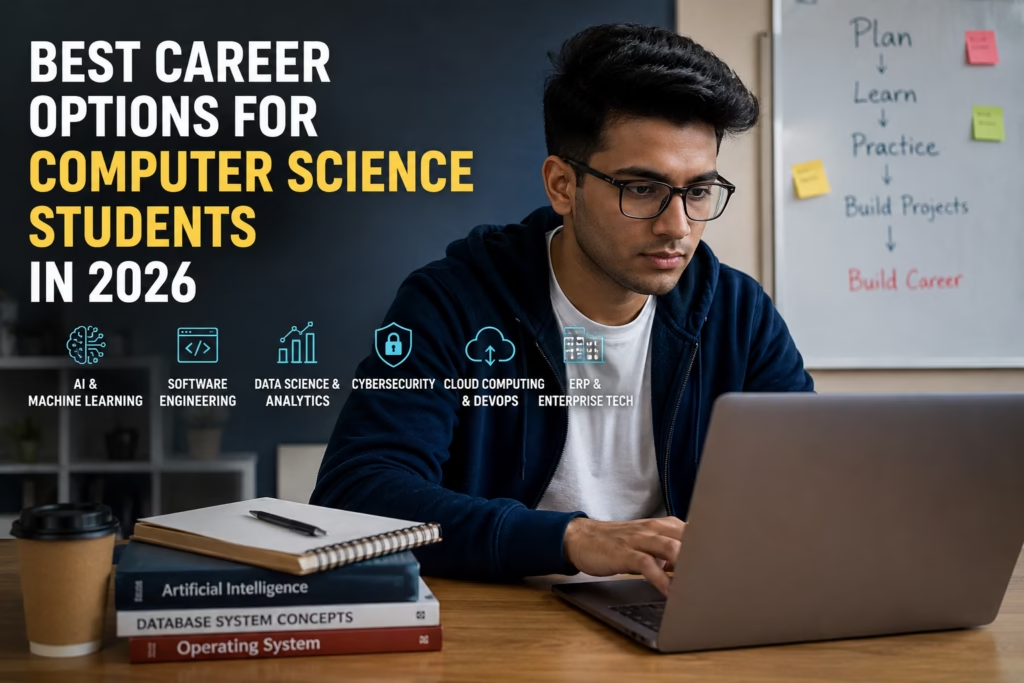
Best Career Options for Computer Science Students in 2026 Choosing a technology career in 2026 is about more than selecting a programming language. Students need to understand the type of work, skills, tools, learning curve and long-term opportunities associated with each career path. By Sikdar Technologies Academy • Updated August 2026 • 12–15 min read COMPUTER SCIENCE CAREER LANDSCAPE · 2026 AI &Machine Learning SoftwareEngineering ERP &Enterprise Tech Cybersecurity Data Science& Analytics Cloud &DevOps COMPUTERSCIENCE Quick Answer Some of the strongest career paths for Computer Science students in 2026 include Artificial Intelligence and Machine Learning, Software Engineering, Data Science, Cybersecurity, Cloud Computing and DevOps, and ERP and enterprise technology. The right option depends on your interests, existing skills, preferred type of work and long-term career goals. Table of Contents The Computer Science Career Landscape in 2026 Artificial Intelligence & Machine Learning Software Development & Engineering Data Science & Analytics Cybersecurity Cloud Computing & DevOps ERP & Enterprise Technology How to Choose the Right Career Path Skills Every Computer Science Student Should Build A Practical Career Roadmap for Students Frequently Asked Questions The Computer Science Career Landscape in 2026 Computer Science continues to offer a wide range of career opportunities. However, the technology industry is becoming more specialised. Instead of learning only one programming language, students increasingly need a combination of programming fundamentals, problem-solving ability, domain knowledge, communication skills and practical project experience. Artificial Intelligence has changed how software is built, while cloud platforms have changed how applications are deployed and maintained. At the same time, businesses still depend on software engineers, data professionals, cybersecurity specialists and enterprise systems. Therefore, there is no single “best” career for every Computer Science student. A better approach is to understand the major career paths and select one that matches your strengths. Career Path 01 Artificial Intelligence & Machine Learning Artificial Intelligence and Machine Learning are among the most discussed technology career areas in 2026. AI is being applied across software products, business operations, customer experiences, automation and data-driven systems. Students interested in mathematics, statistics, programming and experimentation may find this field particularly suitable. What can you work on? Machine learning models Generative AI applications Natural language processing Computer vision systems AI-powered automation Recommendation and prediction systems Core skills to develop Python Statistics Machine Learning Data Structures Deep Learning APIs Career Path 02 Software Development & Engineering Software engineering remains one of the broadest career options for Computer Science students. Developers design, build, test, maintain and improve software applications used by individuals and organisations. Modern software development can include web applications, mobile applications, backend systems, APIs, databases, distributed systems and AI-assisted development workflows. Common areas of specialisation Frontend development Backend development Full-stack development Mobile application development API and backend engineering Software testing and quality engineering Important skills Java Python JavaScript SQL Git APIs Problem Solving Career Path 03 Data Science & Analytics Organisations generate large amounts of data through applications, transactions, operations and customer interactions. Data professionals help convert that data into useful information for decision-making. This career path can suit students who enjoy analytical thinking, statistics, business questions and working with structured and unstructured datasets. Potential roles Data Analyst Business Intelligence Analyst Data Scientist Data Engineer Analytics Engineer Skills to learn SQL Python Statistics Data Visualisation Excel BI Tools Career Path 04 Cybersecurity As businesses depend more heavily on digital systems, protecting applications, networks, devices and information remains an important technology requirement. Cybersecurity is a broad field. Students can explore security operations, application security, network security, identity management, security testing and governance. Useful foundations Computer networks Operating systems Linux fundamentals Authentication and access control Web security fundamentals Security monitoring Career Path 05 Cloud Computing & DevOps Cloud computing has become a core part of modern application infrastructure. DevOps practices connect development and operations through automation, deployment, monitoring and infrastructure management. What students should understand Cloud computing concepts Linux and networking Containers CI/CD pipelines Infrastructure automation Monitoring and observability AWS Azure Linux Docker CI/CD Git Career Path 06 ERP & Enterprise Technology Enterprise Resource Planning systems connect important business functions such as finance, sales, procurement, inventory, manufacturing and human resources. Students who are interested in the intersection of technology and business processes can consider ERP as a career direction. The field combines software, business workflows, configuration, data and enterprise operations. Areas students can explore SAP ecosystem Odoo ERP ERP implementation Business process analysis ERP customisation Enterprise application support Computer Science Career Paths Compared Career Path Good Fit For Important Foundations Typical Work AI & ML Students interested in AI, maths and experimentation Python, statistics, ML Models, AI applications, automation Software Engineering Students who enjoy building applications Programming, DSA, databases Applications, APIs and software systems Data Science Analytical and statistics-oriented students SQL, Python, statistics Analysis, models and insights Cybersecurity Students interested in security and systems Networks, Linux, security Security monitoring and protection Cloud & DevOps Students interested in infrastructure Linux, networking, cloud Deployment, automation and infrastructure ERP & Enterprise Tech Students interested in technology + business Business processes, ERP concepts Implementation, configuration and support How to Choose the Right Career Path Choosing a career should not be based only on which technology is trending on social media. A better decision comes from comparing your interests, strengths and preferred working style with the requirements of each field. Do you enjoy building things? Software engineering and application development may be worth exploring. Do you enjoy mathematics and experimentation? AI, Machine Learning and Data Science may be suitable. Do you enjoy systems and infrastructure? Cloud Computing and DevOps can be strong options. Do you like security and investigation? Cybersecurity can provide a specialised direction. Do you like business processes? ERP and enterprise technology can combine technology with business operations. Not sure yet? Start with programming fundamentals before selecting a specialised technology path. Skills Every Computer Science Student Should Build Specialisation is important, but students should not ignore fundamental technical skills. A strong foundation makes it easier to learn new tools and adapt as technology changes. Programming fundamentals: Understand

Powering Ideas, Shaping Futures

contact@sikdartechnologies.com

project@sikdartechnologies.com

© 2025 Sikdar Technologies Pvt Ltd