Enterprise ERP Customization vs Integration in 2026: The Decision Framework for Legacy System Modernization
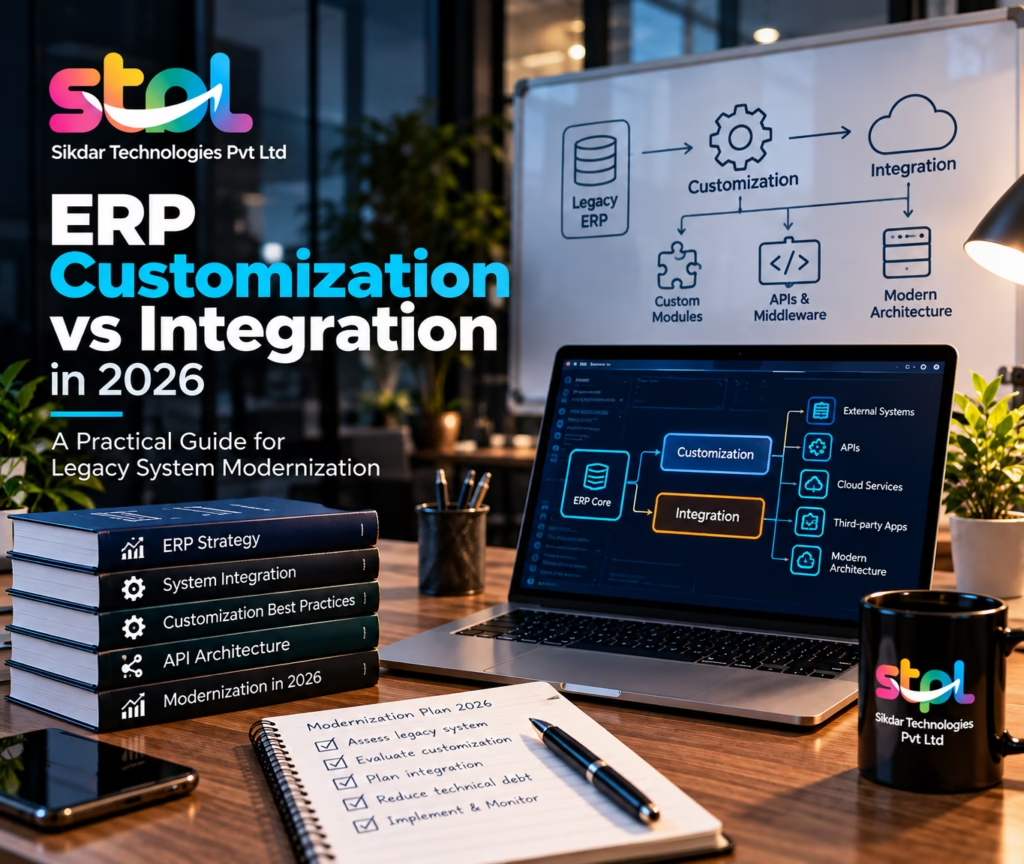
ENTERPRISE TECHNOLOGY • 2026 STRATEGIC REPORT Enterprise ERP Customization vs Integration in 2026 Discover the definitive 2026 decision framework for legacy system modernization. Learn how CTOs balance custom code, API integration, and enterprise technical debt. Updated: September 30, 2026 14 min read Enterprise Architecture Frontend / Clients Web & Mobile Apps → Secure Gateway API Management → Core Engine ERP Core & Middleware Table of Contents Introduction Executive Summary 1. What Is ERP Customization? 2. What Is ERP Integration? 3. Comparison Matrix 4. The 2026 Decision Framework 5. Evaluation Matrix Table 6. Over-Customization & Technical Debt 7. API-First & Composable ERP 8. Modernization Architecture 9. Odoo ERP Context 10. Total Cost of Ownership (TCO) 11. Security Considerations 12. Modernization Roadmap 13. Common Pitfalls 14. Frequently Asked Questions Sources & References Introduction Enterprise resource planning systems form the digital backbone of many organizations. However, technology leaders often face difficult architecture choices when they modernize legacy systems. In particular, evaluating ERP customization vs integration helps determine which functions should stay in the core and which should run on external platforms. Historically, firms relied heavily on custom code inside private database layers. Although this approach allowed teams to tailor workflows quickly, it also made upgrades harder and increased maintenance work. As a result, poorly governed integration can create fragmented data models and complex middleware bottlenecks. This guide gives IT directors and enterprise architects a practical framework for evaluating ERP customization vs integration in 2026. More importantly, it shows how to balance faster delivery with long-term architectural flexibility. ERP modernization architecture: customization, integration, and enterprise core boundaries. Executive Summary: The 2026 Architecture Playbook Modernizing legacy environments requires a practical approach rather than a fixed rule. In practice, neither core code changes nor standalone integration solves every business need. The Core Problem Monolithic legacy software can struggle to support fast digital initiatives without major code changes. Moreover, Over time, those changes can lock enterprises into costly upgrade cycles. The Architectural Choice In practice, the goal is to balance core changes with decoupled services. At the same time, API-first strategies and modular frameworks can isolate changes more safely. Customization Makes Sense When: In addition, the process is central to a proprietary competitive advantage and requires strict transaction consistency. Integration Makes Sense When: Best-of-breed cloud SaaS tools exist, or multi-system data sharing across separate business units remains mandatory. Hybrid Architecture Makes Sense When: Core financial ledgers remain secure inside the database while specialized customer portals operate externally. 1. What Is ERP Customization? ERP Customization vs Integration Explained In practice, ERP customization means changing source code, database structures, or business rules to support workflows that standard features do not cover. Featured Definition: What is ERP customization? Meanwhile, ERP customization changes native software code or database schemas to support unique operating procedures. In addition, Unlike standard configuration, it adds custom code that changes how the core system behaves. Key Dimensions of Customization For example, Core Business Logic: Modifying core calculation engines, ledger posting rules, or inventory algorithms. In addition, Workflow Customization: Therefore, Altering multi-level approval flows and automated notification triggers. Similarly, Database-Level Changes: In practice, Adding custom tables, modifying database relationships, or writing custom stored procedures. Moreover, UI Customization: Meanwhile, Injecting custom scripts, modifying screen layouts, or adding custom field checks. The Customization Paradox: Custom modifications deliver immediate satisfaction by matching habits, but they fundamentally disrupt upgrade paths, turning routine patches into complex refactoring tasks. 2. What Is ERP Integration? ERP Customization vs Integration Explained Furthermore, ERP integration connects enterprise software with external applications such as CRM engines, data warehouses, and microservices. For example, In this way, teams can synchronize data without changing the core. Featured Definition: What is ERP integration? Consequently, ERP integration uses APIs, middleware, and event buses to connect different enterprise systems. Therefore, teams can extend capabilities while keeping the core stable. Modern Integration Mechanisms Meanwhile, REST APIs & GraphQL: Furthermore, Lightweight endpoints facilitating synchronous data exchange and precise data queries. As a result, Webhooks & Event-Driven Architecture: Real-time push notifications triggered by specific database events (e.g., order created). Therefore, iPaaS Platforms: In contrast, Cloud middleware providing pre-built connectors, data mapping, and error handling. In practice, Enterprise Service Bus: Similarly, Centralized routing and message routing layers for complex legacy environments. 3. ERP Customization vs Integration: Side-by-Side Comparison In contrast, Evaluating these choices requires a clear view of operational, financial, and technical trade-offs. Therefore, the matrix below compares customization with integration. Evaluation Criteria ERP Customization ERP Integration Implementation Speed Fast at first, but delivery slows as technical debt grows. Requires initial API layers and middleware contracts. Initial Cost Moderate to High (requires specialized core developers). Moderate (requires integration tooling, licenses, and API design). Long-Term Maintenance High; custom code can break during version upgrades. Low to Moderate; managed through decoupled API contracts. Upgrade Complexity High; often requires code merging and regression testing. Lower; core upgrades can happen separately from external apps. Technical Debt Can grow quickly and make the core harder to maintain. Can be reduced through clear boundaries and modular services. Data Consistency Strong transactional consistency within one database. Requires careful handling of retries and eventual consistency. Vendor Dependency Can increase reliance on custom developers and legacy code. Can spread dependencies across standard APIs and SaaS partners. Business Agility Can become rigid and make core process changes harder. Can remain flexible because external systems can change without changing the core. ERP customization vs integration decision framework for enterprise modernization. 4. The 2026 Enterprise ERP Modernization Decision Framework: ERP Customization vs Integration Similarly, To reduce guesswork, enterprise architects can use a clear decision framework. As a result, In turn, this framework classifies each requested feature or modernization requirement. Choose Customization When: In practice, the process is strictly native to the ERP data model (e.g., statutory tax calculations). Furthermore, Deep, atomic database transactions are mandatory to prevent ledger discrepancies. Consequently, The workflow represents core enterprise business IP and business advantage. In contrast, Introducing external middleware would inject high latency into operations. Choose Integration When: At the same time,