
Claim Your FREE Website Audit—Limited Time Offer | Contact Us NOW!

Web & Mobile Development

Web & Mobile Development

App Development Cost in India (2026): Hidden Costs Guide

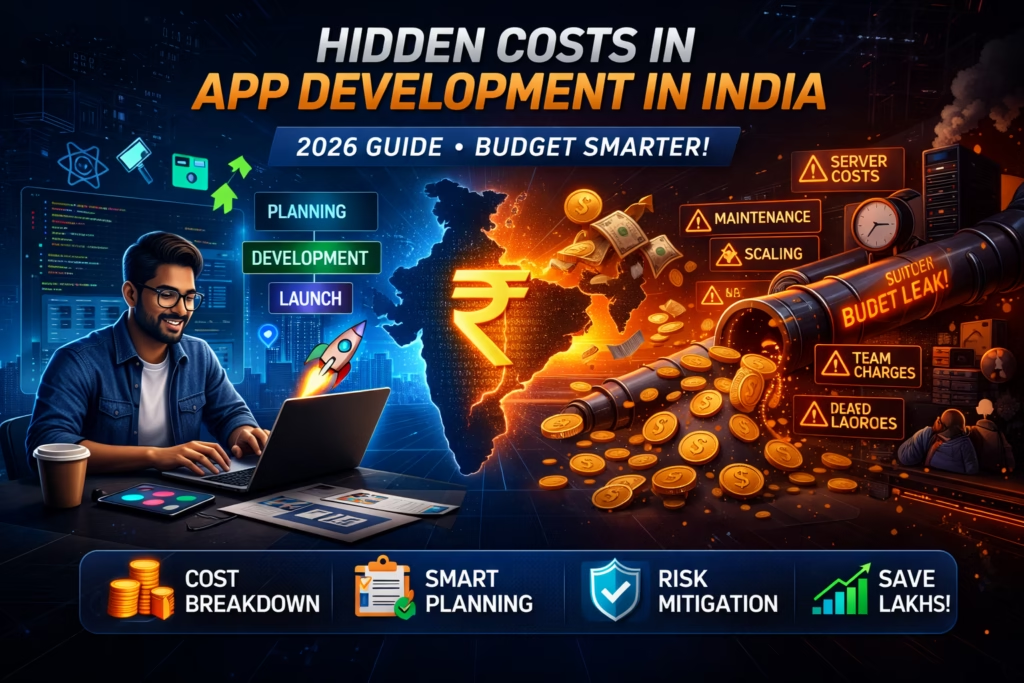
Hidden Costs in App Development (Most Agencies Don’t Tell You) The Cost Trap Most Businesses Fall Into If you’re planning to build a mobile app, you’ve probably seen quotes like: “We can build your app in ₹2–3 lakh.” Sounds reasonable, right? But here’s the reality:Most businesses end up spending 2x–3x more than the initial quote. Not because agencies are always dishonest —but because critical costs are never discussed upfront. This is where most projects fail  not in development, but in planning. In this guide, we’ll break down the hidden costs in app development in India, with real-world insights and how you can avoid them. Incomplete Requirement Planning The Problem Most projects start with vague ideas: “We need an app like Uber” “Features can be decided later” This leads to: Scope changes Feature additions mid-development Redesign & rework Impact: 30%–100% increase in cost Real Scenario A startup began with ₹2.5 lakh budget→ Added features later→ Final cost crossed ₹6 lakh Solution Create a detailed SRS (Software Requirement Specification) Finalize features before development Use wireframes & prototypes UI/UX Revisions (The Silent Budget Killer) The Problem Clients often underestimate design importance. “Small changes” like: Button placement Color change Layout tweaks Can require full redesign. Impact: ₹20,000 – ₹1,50,000+ Solution Approve design in Figma before development Limit revision cycles Focus on UX from day one Backend & Scalability Costs The Problem Many apps are built only for initial launch, not for growth. When users increase: App slows down Server crashes Data handling fails Impact: ₹50K – ₹5 lakh+ Solution Use scalable architecture (Node.js, microservices) Cloud infrastructure (AWS / DigitalOcean) Perform load testing Security & Data Protection Costs The Problem Cheap apps often ignore security: Weak authentication No data encryption Vulnerable APIs This leads to data breaches & legal risks Impact: ₹30K – ₹2 lakh+ Solution Secure authentication (JWT, OAuth) SSL + encryption Regular security audits Third-Party Integration Costs` The Problem Apps rely on services like: Payment gateways SMS / OTP Maps / APIs Most of these are paid services Impact: SMS cost per OTP Payment gateway transaction fees API usage charges Solution Plan integrations early Estimate monthly usage Choose cost-efficient providers Deployment & Hosting Costs The Problem Launching your app requires: Cloud hosting Server setup DevOps management Impact: ₹5K – ₹50K/month Solution Choose optimized hosting plan Use auto-scaling Monitor usage Maintenance & Updates The Problem After launch, your app needs: Bug fixes Updates Performance optimization Impact: 15%–25% of development cost/year Real Insight ₹4 lakh app → ₹1 lakh/year maintenance Solution Annual Maintenance Contract (AMC) Continuous monitoring Regular updates App Store & Compliance Costs The Problem Publishing apps involves: Google Play fee (₹2,000 one-time) Apple Developer fee (₹8,500/year) Plus: App rejection fixes Policy compliance updates Solution Follow guidelines from start Test before submission Technical Debt (The Hidden Disaster) The Problem Cheap development leads to: Poor code quality Frequent bugs Difficult scaling Eventually requires rebuilding the app Impact: 2x–5x cost later Solution Clean architecture Experienced developers Code review process Real Cost Breakdown (India Example) Component Estimated Actual Development ₹3,00,000 ₹3,00,000 Changes & Rework — ₹20,000-35,000 Backend Scaling — ₹25,000-40,000 UI Updates — 10,000-20,000 Maintenance (1 Year) — ₹1,00,000 Total ₹3L ₹4.55L-4.95L How to Avoid Hidden Costs in App Development ✔ Define clear requirements✔ Choose quality over cheapest quote✔ Ask for full cost breakdown✔ Plan for scaling from day one✔ Work with experienced development team Final Thoughts App development doesn’t become expensive overnight. It becomes expensive when you ignore the hidden costs. If you plan properly,you can save lakhs of rupees and months of time. Get a Transparent Cost Estimate (FREE) At Sikdar Technologies, we help businesses build | Scalable, secure, and cost-efficient applications — with zero hidden charges. Get a FREE consultation | Detailed cost breakdown | Expert guidance project@sikdartechnologies.in | Call Us +91 6289166961 Schedule Consultation Frequently Asked Questions What are the hidden costs in app development? Hidden costs in app development include: Requirement changes and rework UI/UX redesign Backend scaling Third-party integrations Maintenance and updates .These costs are often not included in the initial quote, which is why final expenses can increase by 2x–3x. Why does app development cost increase after starting the project? App development costs usually increase due to: Incomplete planning Feature additions during development Design changes Performance optimization needs .Without proper scope definition, projects tend to expand beyond the initial estimate. How much does app development cost in India in 2026? The cost depends on complexity: Basic app: ₹1L – ₹4L Medium app: ₹4L – ₹10L Advanced app: ₹10L+ .However, hidden costs can increase the total budget significantly if not planned properly. How can I avoid hidden costs in app development? You can avoid hidden costs by: Defining clear requirements (SRS) Finalizing UI/UX before development Choosing a scalable architecture Asking for a detailed cost breakdown Working with an experienced development team Are maintenance costs included in app development pricing? In most cases, maintenance is NOT included in the initial development cost. Maintenance typically costs 15%–25% per year of the development cost and includes: Bug fixes, Updates, Performance improvements What is the biggest mistake businesses make in app development? The biggest mistake is choosing the cheapest option instead of the right solution. Cheap development often leads to: Poor code quality, Frequent bugs, High long-term costs Do third-party services increase app development cost? Yes, third-party services like: Payment gateways, SMS/OTP services, Maps APIs, Have recurring costs based on usage, which are often not included in initial quotes. Is custom app development better than using ready-made solutions? It depends on your business needs: SaaS tools → cheaper initially Custom apps → scalable and flexible long-term. For growing businesses, custom development often provides better ROI.

google.com, pub-8966458381222183, DIRECT, f08c47fec0942fa0
Startup & Growth, Web & Mobile Development

WordPress Website Cost in India (2026 Guide) | Sikdar Technologies

Why WordPress Website Cost Confuses Most People One of the most common questions asked by business owners, startups, freelancers, and even students is: “How much does a WordPress website cost in India?” The confusion comes from wildly different quotes—₹5,000 to ₹5,00,000+—with little clarity on what you actually get. Cheap websites often lack performance, security, or scalability, while expensive quotes feel unjustified. This 2026-ready guide explains the real cost of building a WordPress website in India, with clear pricing ranges, factors, examples, and smart budgeting advice—written especially for non-technical decision-makers. Why WordPress Is the Most Popular Website Platform WordPress powers over 43% of all websites globally, making it the most trusted CMS for businesses of all sizes. Why Businesses Choose WordPress Easy content management (no coding needed) SEO-friendly structure Thousands of plugins & themes Scalable from small sites to enterprise portals Cost-effective compared to custom development WordPress Website Cost in India (2026 Pricing) 1. Basic WordPress Website (₹6,000 – ₹8,000) Best for individuals, students, freelancers, and small businesses. Includes: 4–6 pages (Home, About, Services, Contact) Free or basic premium theme Basic contact form Mobile responsive design Basic SEO setup Use Cases: Personal websites Portfolio sites Small local businesses ⏱️ Timeline: 5–10 days 2. Business WordPress Website (₹10,000 – ₹20,000) Ideal for growing businesses and startups. Includes: Custom UI/UX design 8–15 pages Premium theme or custom layout Lead forms & WhatsApp integration Speed optimization SEO-friendly structure Security plugins Use Cases: Company websites Service-based businesses Startup landing websites ⏱️ Timeline: 2–4 weeks 3. Advanced / Custom WordPress Website (₹50,000 – ₹1,00,000+) Built for high-traffic, brand-focused, or feature-rich websites. Includes: Fully custom design Custom plugins or functionality Advanced forms & automation CRM & third-party integrations Multilingual support Performance & security optimization Use Cases: Corporate websites Educational platforms Membership websites Large service portals ⏱️ Timeline: 1–2 months 4. WordPress E-Commerce Website (₹10,000 – ₹50,000+) Best for businesses selling products or services online. Includes: WooCommerce setup Product management Payment gateway integration Shipping & tax setup Order & inventory management Security & performance tuning Use Cases: Online stores D2C brands Subscription-based services ⏱️ Timeline: 3–4 weeks Key Factors That Affect WordPress Website Cost 1. Website Type Informational website → Lower cost Business website → Medium cost E-commerce / portal → Higher cost 2. Design Requirements Pre-built theme → Cheaper Custom UI/UX → Higher cost but better branding & conversions 3. Plugins & Features Common paid plugins: Page builders Security tools Backup solutions SEO tools Payment gateways Some plugins require annual renewals. 4. Hosting & Domain Cost Typical yearly costs: Domain: ₹800 – ₹1,200 Hosting: ₹2,000 – ₹10,000+ Managed hosting costs more but improves speed & security 5. SEO & Performance Optimization SEO-friendly websites cost more initially but: Rank better on Google Generate organic leads Reduce ad spending long-term Real-World Cost Examples Small Business Website A local service provider built a WordPress website for ₹35,000 and generated consistent leads within 3 months. Startup Website A tech startup invested ₹75,000 in a custom WordPress site and reduced paid ad dependency by 40% using SEO. E-Commerce Website An online store built with WooCommerce for ₹1.8 Lakhs, scaling to ₹25+ Lakhs annual revenue. Ongoing Maintenance Cost (Often Ignored) Annual WordPress maintenance costs ₹8,000 – ₹40,000, covering: Plugin & theme updates Security patches Backup & monitoring Speed optimization Minor content changes Ignoring maintenance leads to hacks, downtime, and SEO loss. Common Mistakes That Increase Cost Choosing the cheapest developerIgnoring SEO from day oneUsing too many pluginsNo performance optimizationNo long-term maintenance plan Cheap websites often cost more later. Why Choose Sikdar Technologies We build business-focused WordPress websites, not just pages. Our Expertise ✔️ Custom WordPress development✔️ SEO-optimized website structure✔️ High-speed, secure builds✔️ Business & startup experience✔️ Transparent pricing & support Industries We Serve Healthcare Education IT & SaaS E-commerce Professional services Conclusion: How Much Should You Budget? For a WordPress website in India (2026): Basic website: ₹10k – ₹25k Business website: ₹30k – ₹80k Advanced website: ₹1L – ₹3L+ E-commerce website: ₹60k – ₹3.5L+ The best strategy:Invest once, build right, and scale smoothly. Get a Free WordPress Website Cost Estimate Contact Sikdar Technologies for a free consultation, clear pricing, and expert guidance no obligations. Schedule Consultation Frequently Asked Questions Can I build a WordPress website under ₹10,000? Yes, but it will be very basic with limited customization and scalability. Is WordPress good for business websites? Absolutely. WordPress is one of the best platforms for SEO-friendly, scalable business websites. How long does it take to build a WordPress website? Anywhere from 1 week to 2 months depending on complexity. Who owns the website and content? You do. Full ownership is provided after delivery.

google.com, pub-8966458381222183, DIRECT, f08c47fec0942fa0
Industry Solutions, System Architecture & APIs, Web & Mobile Development

How Much Does It Cost to Build an App Like Uber? (2026 Guide) | Sikdar Technologies

Why Everyone Wants an Uber-Like App Ride-hailing apps like Uber have transformed urban transportation—and inspired startups, fleet owners, and enterprises to build similar platforms for taxis, bikes, logistics, ambulances, and delivery. But the biggest question decision-makers ask is simple:“How much does it cost to build an app like Uber?” The short answer: It depends.The real answer: This guide breaks down the actual cost, features, tech stack, timelines, and hidden expenses—so you can plan smartly and avoid budget shocks. What Is an Uber-Like App? (Core Components) An Uber-style platform is not one app—it’s an ecosystem of apps and systems: 1. User App (Passengers) Signup & login Ride booking Real-time GPS tracking Fare estimation In-app payments Ratings & reviews 2. Driver App Driver onboarding & KYC Ride requests (accept/reject) Navigation & live tracking Earnings dashboard Availability status 3. Admin Panel (Web Dashboard) User & driver management Pricing & commission control Ride monitoring Payments & settlements Analytics & reports Each component directly impacts development cost. Cost to Build an App Like Uber (India – 2026) Basic Uber-Like App (₹1 – ₹2 Lakhs) Best for MVPs and early-stage startups. Includes: User & driver apps (basic) Real-time ride booking GPS tracking Simple admin panel Cash + basic payment gateway ⏱️ Timeline: 3–4 monthsLimitations: Limited scalability, minimal automation Mid-Level Uber-Like App (₹3 – ₹4 Lakhs) Ideal for growing startups & city-level operations. Includes: Advanced ride matching Dynamic pricing (basic surge) Multiple payment methods Driver incentives Push notifications Robust admin dashboard ⏱️ Timeline: 5–6 monthsBest balance of cost & features Enterprise Uber-Like App (₹6 – ₹7+ Lakhs) Built for large-scale, multi-city, or global platforms. Includes: AI-based dispatching Advanced surge pricing Real-time analytics Fraud detection Cloud auto-scaling High-level security & compliance ⏱️ Timeline: 7–12 monthsComparable to Uber, Ola, Lyft-scale systems Key Factors That Affect Uber-Like App Development Cost 1. Feature Complexity More features = more development time = higher costExamples: Ride scheduling Wallet system Multi-language support Multi-city operations 2. Platform Choice Android only → Lower cost iOS only → Slightly higher Android + iOS → Best ROI using Flutter / React Native 3. Real-Time Technology Uber-like apps rely heavily on: GPS & maps WebSockets Real-time databases These significantly impact backend cost. 4. Third-Party Integrations Google Maps / Mapbox Payment gateways (Stripe, Razorpay) SMS & OTP services Cloud messaging (Firebase) Most have usage-based recurring costs. 5. Cloud Infrastructure Cloud costs depend on: Number of active users Ride volume Data storage Real-time tracking load Typical cloud cost starts from ₹30,000–₹1,00,000/month as you scale. Technology Stack Used for Uber-Like Apps Frontend (Mobile): Flutter / React Native Swift (iOS) Kotlin (Android) Backend: Node.js / Python REST & WebSocket APIs Database: MongoDB / PostgreSQL Redis (real-time caching) Cloud: AWS / Google Cloud / Azure Real-World Use Cases Taxi & cab booking apps Bike & auto booking platforms Logistics & delivery apps Ambulance & emergency services Corporate transport systems Uber-like architecture works far beyond taxis. Maintenance & Operational Cost Annual maintenance costs 20–30% of initial development cost, covering: Bug fixes Performance optimization Server scaling Security updates New features Ignoring maintenance is one of the costliest mistakes startups make. Common Mistakes That Increase Cost  Building all features at once No MVP strategy Ignoring scalabilityChoosing cheapest developersNo long-term cloud planning Smart founders start lean and scale fast. Why Choose Sikdar Technologies We specialize in scalable, real-time, on-demand platforms. What We Offer ✔️ Uber-like app development✔️ Flutter & Node.js experts✔️ Real-time GPS & tracking systems✔️ Secure & scalable cloud architecture✔️ Transparent pricing & full source code We build apps that are ready for real users, real traffic, and real revenue. Conclusion: What Should You Budget? For an Uber-like app in India (2026): MVP: ₹2 Lakhs City-Level Platform: ₹6 Lakhs Enterprise / Multi-City: ₹8 Lakhs+ The smartest approach:Build an MVP → validate demand → scale features gradually. Get a Free Uber-Like App Cost Estimate Contact Sikdar Technologies for a free consultation, feature roadmap, and exact cost estimate—no commitments. Schedule Consultation Frequently Asked Questions Can I build an Uber-like app under ₹2 Lakhs? Only a very basic MVP with limited features. How long does it take to build an Uber-like app? 3–12 months depending on complexity. Is Flutter suitable for Uber-like apps? Yes. Flutter reduces cost while maintaining performance. Who owns the source code? You do. Full ownership after project delivery.

google.com, pub-8966458381222183, DIRECT, f08c47fec0942fa0
Business & Digital Strategy, Software Development, Web & Mobile Development

Mobile App Development Cost in India (2026 Guide) | Sikdar Technologies

Why Mobile App Cost Confuses Most Businesses One of the first—and most confusing—questions business owners and startup founders ask is: “How much does it really cost to build a mobile app in India?” The problem is not the question—it’s the answers available online. You’ll see estimates ranging from ₹50,000 to ₹50,00,000+, often with no explanation of what’s included. This confusion leads to poor budgeting, unrealistic expectations, wrong technology decisions, and in many cases, failed app projects. This 2026-ready guide explains mobile app development cost in India clearly, practically, and transparently—so you can make confident, business-focused decisions, even if you’re completely non-technical. Why India Is a Global Hub for Mobile App Development India is one of the world’s most trusted destinations for mobile app development—and for good reason. Key Reasons Companies Choose India Highly skilled developers with global project experience Expertise in Flutter, React Native, Node.js, Python, AWS 60–70% lower development cost compared to US & Europe Mature startup & enterprise ecosystem Strong English communication and agile processes That’s why startups, SMEs, and enterprises worldwide outsource mobile app development to India. Mobile App Development Cost in India (Realistic 2026 Ranges) 1. Basic Mobile App (₹1.5 – ₹3 Lakhs) Best suited for MVPs, students, early-stage startups, and small businesses. Includes: Static or simple UI Basic user authentication Simple database Limited screens (5–7) Android or iOS platform Typical Use Cases: Business profile app Portfolio app Simple appointment or booking app ⏱️ Timeline: 2–3 weeks 2. Medium Complexity App (₹4 – ₹8 Lakhs) Ideal for startups testing market demand and businesses going digital. Includes: User login & role management Backend APIs & database Payment gateway integration Push notifications Admin panel Android + iOS (cross-platform) Typical Use Cases: E-commerce apps Service booking platforms Food delivery MVPs ⏱️ Timeline: 2–3 months 3. High-End / Enterprise App (₹10 – ₹25+ Lakhs) Designed for scale, performance, and long-term growth. Includes: Advanced UI/UX & animations Real-time features (chat, tracking, live updates) AI/ML, analytics, or dashboards Cloud hosting (AWS / GCP / Azure) High-level security & compliance Continuous maintenance & monitoring Typical Use Cases: Uber-like apps Fintech platforms Healthcare & telemedicine apps SaaS products ⏱️ Timeline: 4–5+ months Key Factors That Decide Mobile App Development Cost 1. App Complexity More features mean: More development hours More testing Higher long-term maintenance Simple rule: More value = higher cost (but better ROI). 2. Platform Choice Android only: Lowest initial cost iOS only: Slightly higher due to ecosystem standards Android + iOS: Best ROI using Flutter or React Native 3. UI/UX Design Custom UI/UX directly affects: User engagement App retention Conversion rates A well-designed app may cost more upfront—but generates higher lifetime revenue. 4. Backend & Cloud Infrastructure Cost varies depending on: Number of users Data volume Security & compliance needs Real-time processing Cloud services usually follow pay-as-you-scale pricing. 5. Third-Party Integrations Common integrations include: Payment gateways (Razorpay, Stripe) Google Maps & location services SMS / OTP services Analytics & CRM tools  Many third-party tools have monthly or per-usage costs. Real-World Use Cases (India-Based Projects) Startup MVP A logistics startup built a Flutter-based MVP for ₹5.2 Lakhs, validated demand, then scaled to enterprise level after funding. Business Automation App A manufacturing firm digitized internal operations for ₹7 Lakhs, saving ₹18 Lakhs annually in manual operational costs. Healthcare Application A secure appointment booking & teleconsultation app built for ₹12 Lakhs, compliant with healthcare data standards. Benefits of Developing a Mobile App in India 60–70% cost savings vs US/Europe Access to full-stack development teams Faster time-to-market Strong post-launch support & maintenance Ideal for startups, SMEs, and enterprises Why Choose Sikdar Technologies We don’t just develop apps—we create business-ready digital products. Our Core Strengths ✔️ Custom mobile app development✔️ Flutter, React Native, Node.js specialists✔️ Transparent pricing—no hidden costs✔️ Startup & enterprise experience✔️ UI/UX, backend & cloud under one roof Industries We Serve Healthcare Logistics Fintech Education E-commerce SaaS platforms Mobile App Maintenance Cost After Launch Annual maintenance typically costs 15–25% of the initial development cost, covering: Bug fixes & performance improvements Server & cloud updates Security patches Feature enhancements This ensures your app stays secure, fast, and scalable. Common Mistakes Businesses Make Choosing the cheapest quote Ignoring scalability planning Poor requirement documentation No long-term support strategy  These mistakes often cost more than proper development. Conclusion: What Should You Budget in 2026? If you’re planning a mobile app in India: MVP / Startup: ₹4–6 Lakhs Growing Business: ₹7–12 Lakhs Enterprise / SaaS: ₹15 Lakhs+ The smartest strategy is to start lean, validate early, and scale gradually. Get a Free App Cost Estimate Don't let another lead slip through the cracks. Contact Sikdar Technologies for a free consultation and discover how Mobile Application can revolutionize your customer acquisition process. Schedule Consultation Frequently Asked Questions Can I build an app under ₹2 Lakhs? Yes, but only for very basic apps with limited features and no scalability. Is Flutter cheaper than native development? Yes. Flutter reduces cost by 30–40% for Android + iOS apps. Who owns the source code? You do. Full source code ownership is provided after project delivery. Uncategorized Mobile App Development Cost in India (2026 Guide) | Sikdar Technologies Sikdar Technologies AI & Automation, Business & Digital Strategy, Uncategorized Why AI Customer Service Chatbots Fail and the Framework That Actually Works Sikdar Technologies Business & Digital Strategy, Uncategorized The SaaS vs Custom Software Decision: A Framework for CTOs | Sikdar Technologies Sikdar Technologies AI & Automation, Uncategorized AI Agents for Indian MSMEs: 2026 Complete Guide14 Sikdar Technologies Business & Digital Strategy, Startup & Growth Technical Debt: When to Fix It vs When to Ship Faster 2026 Guide Sikdar Technologies

google.com, pub-8966458381222183, DIRECT, f08c47fec0942fa0
System Architecture & APIs, Web & Mobile Development

Why Businesses Are Moving to Node.js Microservices in 2025 | Sikdar Technologies

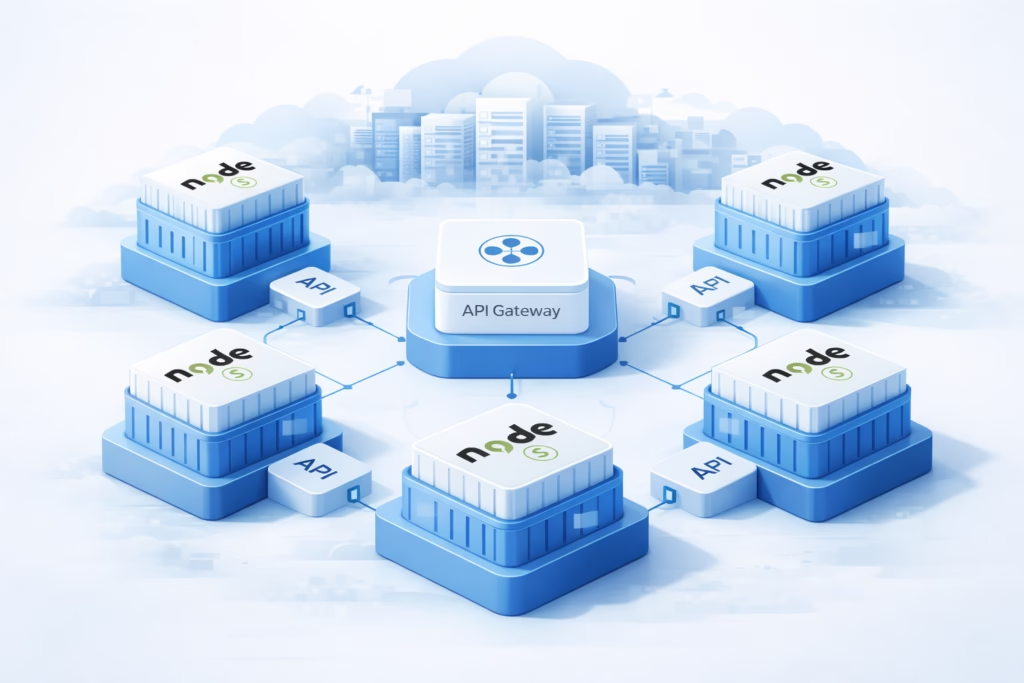
Sikdar Technologies December 16, 2025 5:07 pm Introduction: The Need for Scalable and Flexible System Modern businesses are growing faster than ever—but traditional monolithic software systems are struggling to keep up. As companies scale, they face challenges like slow development cycles, system downtime, difficulty adding new features, and high infrastructure costs. Business owners and technology decision-makers often ask: Why does scaling our application slow down innovation? Why do small changes take so long to deploy? How can we build systems that grow with our business? The answer many businesses are choosing is Node.js microservices architecture. At Sikdar Technologies, we help organizations modernize their systems by adopting microservices powered by Node.js—enabling faster scaling, better performance, and long-term flexibility. What Are Microservices (In Simple Terms)? Microservices architecture breaks a large application into small, independent services. Each service focuses on a single business function and communicates with others through APIs. Instead of one massive system: Each service can be developed, deployed, and scaled independently Failures are isolated, reducing system-wide downtime Teams can innovate faster without impacting the entire application Node.js has become one of the most popular technologies for building these microservices. Why Node.js Is Ideal for Microservices Architecture Node.js is designed for speed, scalability, and efficiency, making it a natural fit for microservices-based systems. Key characteristics include: Event-driven, non-blocking architecture Lightweight runtime Fast API handling Large ecosystem and community support These features make Node.js highly effective for modern, distributed systems. Key Reasons Businesses Are Moving to Node.js Microservices 1. Faster Development and Deployment Node.js microservices allow teams to: Build and deploy features independently Release updates without redeploying the entire system Reduce time-to-market for new products and features This agility is critical for startups and growing businesses competing in fast-changing markets. Sikdar Technologies uses modular development practices to help businesses roll out features faster without disrupting operations. 2. Better Scalability for Growing Businesses In monolithic systems, scaling means scaling the entire application, even if only one part needs more resources. With Node.js microservices: Only high-traffic services are scaled Infrastructure costs are optimized Performance remains stable during traffic spikes This makes Node.js microservices ideal for: Marketplaces SaaS platforms On-demand and real-time applications 3. Improved System Reliability and Uptime In traditional architectures, one failure can bring down the entire system. Microservices reduce this risk: A failure in one service doesn’t crash others Services can be restarted or replaced independently System resilience improves significantly Node.js microservices help businesses maintain higher uptime and better user experiences. 4. Technology Flexibility and Future-Proofing Microservices allow businesses to: Use different technologies for different services Upgrade or replace services without rewriting the entire system Integrate new tools and platforms easily Node.js works seamlessly with: Cloud platforms Containers (Docker, Kubernetes) Modern databases Third-party APIs Sikdar Technologies designs architectures that are flexible and future-ready. 5. Cost Efficiency and Optimized Infrastructure Node.js is lightweight and resource-efficient, which reduces: Server costs Infrastructure overhead Maintenance effort When combined with microservices and cloud infrastructure: Businesses pay only for what they use Systems scale efficiently during demand peaks Operational costs stay under control 6. Ideal for Real-Time and API-Driven Applications Node.js excels in handling: Real-time data processing API-first architectures High-concurrency workloads This makes Node.js microservices perfect for: Fintech platforms Logistics systems Booking and ride-hailing apps Chat, notifications, and live dashboards Real-World Business Use Cases Use Case 1: SaaS Platform Scaling Without Downtime A SaaS business migrated from a monolithic system to Node.js microservices and achieved: Faster feature rollouts Zero-downtime deployments Improved system performance during peak usage Use Case 2: Marketplace Handling High Traffic Volumes An online marketplace used Node.js microservices to: Scale product search independently Handle payment processing securely Improve checkout speed and reliability Use Case 3: Enterprise System Modernization An enterprise replaced legacy systems with Node.js microservices and experienced: Reduced maintenance costs Improved integration with third-party tools Better monitoring and control Sikdar Technologies supports similar transitions by aligning architecture decisions with business goals. Benefits of Node.js Microservices for Businesses Faster Innovation Independent services allow teams to experiment and improve without risk. Higher Performance Node.js handles concurrent requests efficiently, ensuring smooth user experiences. Reduced Risk Failures are isolated, minimizing system-wide impact. Easier Maintenance Smaller codebases are easier to manage and update. Long-Term Scalability Systems grow alongside business needs without costly rewrites. Common Concerns (And How to Address Them) “Microservices Are Too Complex” With the right architecture and tools, complexity is manageable. Sikdar Technologies provides structured planning and implementation. “Is Node.js Secure?” When built correctly, Node.js microservices are secure and widely used by global enterprises. “Is This Right for My Business?” Microservices are ideal for businesses planning growth, high traffic, or continuous innovation. Why Choose Sikdar Technologies for Node.js Microservices What Makes Us Different? Business-Driven ArchitectureWe design systems around your business workflows—not just code. Microservices ExpertiseProven experience in scalable Node.js architectures. Cloud & DevOps IntegrationEnd-to-end deployment, monitoring, and optimization. Custom SolutionsNo generic templates—everything is tailored. Long-Term SupportFrom planning to scaling, we stay with you. Sikdar Technologies builds systems that are not just modern—but sustainable. How to Know If Your Business Is Ready for Microservices Ask yourself: Are feature updates slowing us down? Are traffic spikes causing performance issues? Is system maintenance becoming costly? Do we plan to scale significantly in the next 1–2 years? If yes, Node.js microservices may be the right move. Conclusion: Microservices Are a Strategic Business Decision In 2025, microservices are no longer just a technical trend—they are a business strategy. Node.js microservices help organizations: Scale faster Reduce operational risk Innovate continuously Stay competitive With the right partner, this transition becomes smooth and highly rewarding. Sikdar Technologies is ready to help you design and implement Node.js microservices that power real business growth. Planning to Move to Node.js Microservices? Partner with Sikdar Technologies to modernize your system without disrupting your business. Schedule a Free Consultation

Powering Ideas, Shaping Futures

contact@sikdartechnologies.com

project@sikdartechnologies.com

© 2025 Sikdar Technologies Pvt Ltd