Claim Your FREE Website Audit—Limited Time Offer | Contact Us NOW!

System Architecture & APIs

Industry Solutions, Odoo ERP & Business Systems, Software Development, Startup & Growth, System Architecture & APIs

Odoo for Hearing Aid Clinic India (2026) | Automate & Reduce Costs

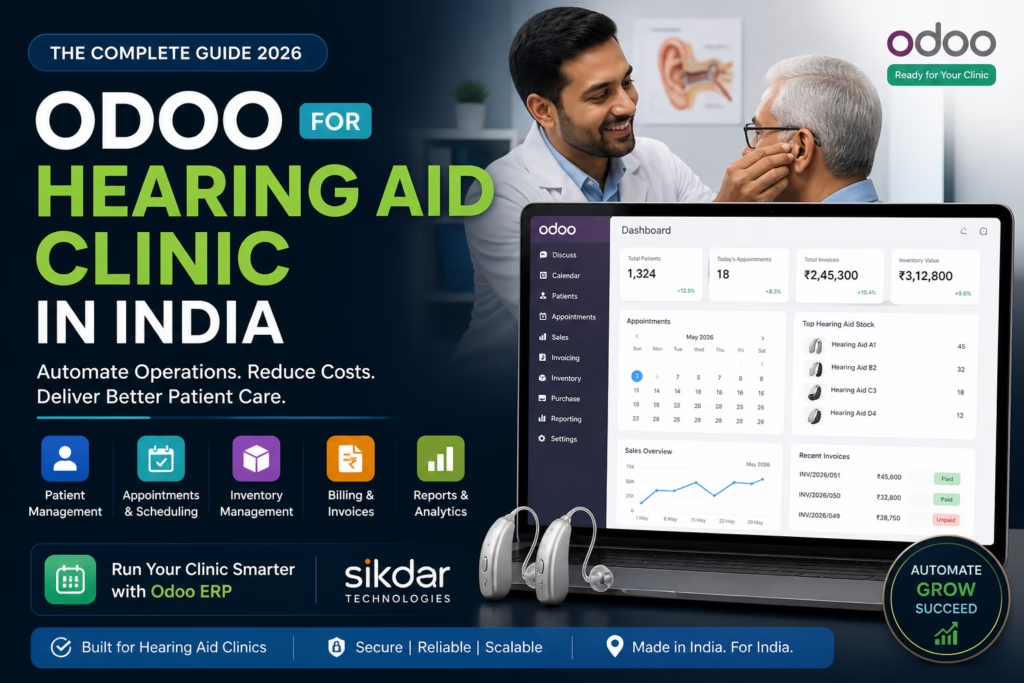
How to Manage a Hearing Aid Clinic Without Spreadsheets — A Complete Odoo Guide | Sikdar Technologies ERP Solutions Healthcare Tech India 2026 · By Sikdar Technologies · May 2026 How to Manage a Hearing Aid Clinic Without Spreadsheets — A Complete Odoo Guide Most hearing aid clinic owners spend more time fixing Excel formulas than helping patients hear better. There’s a smarter way. If you are looking for Odoo for hearing aid clinic in India, this guide will show you exactly how to automate your entire clinic using Odoo ERP. Patient appointments logged in one file. Inventory tracked in another. Billing sitting in a third spreadsheet that only one person knows how to use. Staff scheduling scrawled in a WhatsApp group. Odoo ERP for hearing aid clinics brings these systems together so your team can work from one single source of truth. Sound familiar? You’re not alone. Thousands of audiology clinics, hearing care centres, and ENT practices across India — from Mumbai to Kolkata, Bangalore to Bhopal — are stuck in this exact trap. Manual processes that worked when you had 20 patients a month simply break down when you have 200. The solution isn’t to hire more staff to manage more spreadsheets. The solution is Odoo — the world’s leading open-source ERP platform — implemented the right way, for your specific business. This guide, prepared by the team at Sikdar Technologies, walks you through exactly how Odoo transforms hearing aid clinic operations: what it does, what it costs, and why it’s the most intelligent investment a clinic owner in India can make today. What Is Odoo for Hearing Aid Clinics in India? Odoo is a modular, all-in-one business management platform used by over 12 million users globally across manufacturing, retail, healthcare, and professional services. In India, adoption has surged dramatically as businesses seek cost-effective alternatives to expensive ERPs like SAP or Oracle. Odoo ERP Development Services in India For a hearing aid clinic specifically, Odoo brings together everything you currently manage in disconnected tools — patient records, appointments, inventory, purchases, invoicing, payroll, and reporting — into one unified system your entire team can use. Why Indian Hearing Aid Clinics Are Switching to Odoo India’s hearing healthcare market is growing rapidly. With over 63 million people in India estimated to have significant hearing loss (WHO data), the demand for professional hearing care clinics is accelerating — particularly in Tier 1 and Tier 2 cities. With that growth comes operational complexity that spreadsheets simply cannot handle: Multiple clinic branches across cities High-value inventory (hearing aids costing ₹15,000 to ₹3,00,000 per unit) Insurance and government scheme billing (ADIP, CGHS, ESIS) Audiologist scheduling and certification tracking Patient follow-up cycles (3-month, 6-month, annual) Warranty and repair management The 7 Biggest Problems Spreadsheets Create for Hearing Aid Clinics If you recognise three or more of these, you need an ERP today — not next quarter. Problem 01 Inventory Errors That Cost You Money Hearing aids are expensive, serialised inventory. One missed entry means you think you have stock when you don’t — or you over-order and lock up capital. No automatic reorder alerts, no serial number tracking. Problem 02 Double-Booked Appointments & No-Shows When appointments are managed through phone calls and a diary, double bookings happen constantly. No-show reminders aren’t sent automatically. Staff absence = zero visibility into pending appointments. Problem 03 Billing Mistakes & Delayed Collections Manual invoicing is slow, error-prone, and hard to reconcile. Clinics frequently undercharge, miss follow-up billing for accessories, or lose track of EMI-based payment plans entirely. Problem 04 No Patient History at Your Fingertips When a patient calls about a problem, your staff should pull up their full history in 10 seconds. With spreadsheets, it’s a 10-minute hunt across three files — if the data is even there. Problem 05 Branch Visibility Is Impossible Multiple locations means manually compiling data from multiple files. By the time the consolidated report is ready, it’s already outdated and decisions have already been made on guesswork. Problem 06 Data Security & Access Control Spreadsheets have no meaningful access control. A junior receptionist has the same access to financial data as the clinic owner. One accidental deletion and the data may be gone permanently. Problem 07 No Business Intelligence Growth requires data. Which treatments generate the most revenue? Which hearing aid brands have the highest return rate? Spreadsheets cannot answer these quickly. Odoo answers them in real time with one click. How Odoo Solves Each Problem — Module by Module Odoo is built around modules. You activate what you need and skip what you don’t. For a hearing aid clinic, these are the core modules that deliver immediate impact. Module 1 Odoo Inventory — End Serial Number Chaos Every hearing aid that enters your clinic is logged with its serial number, brand, model, cost price, and supplier. When it is sold, fitted, or sent for repair, Odoo tracks it automatically. No manual entries. No reconciliation at month-end. Many clinics choose Odoo for hearing aid clinic India to gain reliable serialised tracking and automated reorder rules. Serial and lot number tracking per device Automated reorder rules (e.g., reorder Signia Pure C&G when stock drops below 3 units) Multi-location inventory across branches and warehouses Supplier lead time tracking and purchase order automation Warranty period tracking per serial number Real-world result: A mid-size clinic in West Bengal reduced inventory shrinkage by 34% within 6 months of Odoo implementation, simply by moving from manual stock registers to Odoo’s serialised tracking. Module 2 Odoo CRM — Never Lose a Lead or a Patient In hearing care, the sales cycle is long. A prospective patient may enquire online, visit for a hearing test, take a trial period, and only convert weeks later. Without a CRM, these leads fall through the cracks. Lead tracking from website, phone, walk-in, and referral Automated follow-up reminders (trial period expiry, 6-month service due) Customer segmentation (paediatric, geriatric, corporate, insurance) Lost lead analysis — why are patients choosing competitors? Sales performance tracking per audiologist

google.com, pub-8966458381222183, DIRECT, f08c47fec0942fa0
Cloud & DevOps, Odoo ERP & Business Systems, Software Development, System Architecture & APIs

Odoo Healthcare ERP Customization India (2026 Guide)

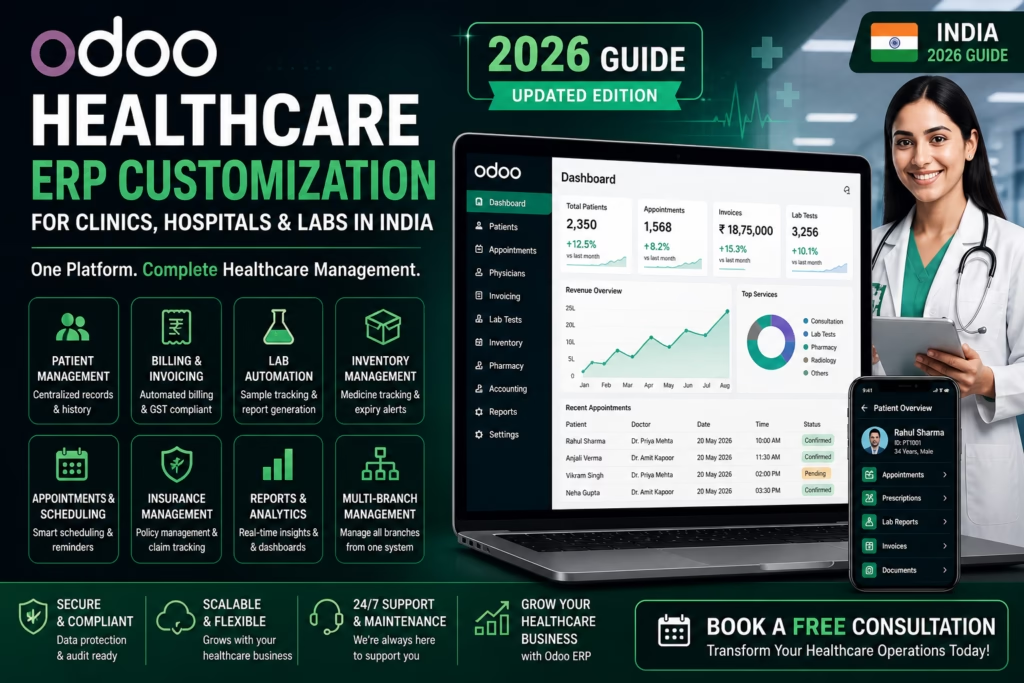
Odoo Healthcare ERP Customization in India | Sikdar Technologies Odoo Healthcare Odoo Customization for Healthcare: What’s Possible and What to Expect Healthcare businesses are drowning in disconnected software. Learn how custom Odoo implementations can unify your operations — from patient management to billing — without the enterprise price tag. 12 min read By Sikdar Technologies Updated May 2025 If you’re running a clinic, diagnostic lab, hospital chain, or healthcare startup, chances are you’re managing patients in one system, billing in another, inventory in a spreadsheet, and staff schedules in a WhatsApp group. This isn’t just inefficient — it’s a liability. Odoo, when customized correctly, can change all of that. What Is Odoo — and Why Does Healthcare Need Customization? Odoo is an open-source ERP (Enterprise Resource Planning) platform that covers everything from CRM to accounting, HR, inventory, and more. Out of the box, it’s powerful for general businesses. But healthcare has unique requirements: patient privacy regulations, appointment workflows, diagnostic report management, insurance claims, and clinical compliance. That’s where customization comes in. With the right development partner — like Sikdar Technologies — Odoo can be transformed into a full-featured healthcare management system tailored to how your organization actually works. Odoo’s modular architecture means you can start with just the modules you need and expand over time — without replacing your entire system. Real-World Use Cases in Healthcare Here’s how organizations across the healthcare spectrum are using customized Odoo today: Patient Management Centralized records, appointment booking, follow-up reminders, and medical history — all in one place. Doctor Scheduling Smart scheduling with availability tracking, auto-assignment, and conflict resolution across multiple departments. Billing & Insurance Automated invoicing, insurance claim tracking, co-pay management, and GST-compliant reporting for Indian healthcare businesses. Lab & Diagnostics Sample tracking, report generation, lab workflow automation, and patient result notifications via SMS/email. Pharmacy Inventory Expiry tracking, reorder alerts, batch management, and integration with billing for seamless dispensing workflows. HR & Payroll Staff onboarding, shift management, attendance tracking, and automated payroll for clinical and admin teams. Key Benefits of Customizing Odoo for Healthcare Single source of truth — all patient, financial, and operational data in one unified system, eliminating data silos and manual reconciliation. Cost-effective scalability — Odoo’s open-source foundation means no per-user licensing traps. Scale from a single clinic to a 50-branch network without budget shocks. Workflow automation — reduce manual tasks like appointment confirmations, invoice generation, and stock reorder by up to 70%, freeing staff for patient care. Custom reporting & analytics — dashboards built around your KPIs — bed occupancy, revenue per department, claim approval rates, or doctor performance metrics. Compliance-ready architecture — configurable for HIPAA-aligned data handling, role-based access control, and audit trails required in regulated healthcare environments. Patient experience improvements — online booking portals, SMS/email reminders, and digital report delivery build trust and reduce no-shows by 30–40%. What Does It Cost? A Realistic Breakdown Costs vary significantly based on the scope of customization, number of users, and integrations required. Here’s a transparent overview: Project Scope Suitable For Estimated Cost (INR) Timeline Basic SetupOdoo Community + 2–3 core modules Single clinic / solo practice ₹80,000 – ₹1,50,000 4–6 weeks Standard CustomizationCustom modules + integrations Polyclinic / diagnostic lab ₹2,50,000 – ₹6,00,000 2–4 months Enterprise-Grade BuildFull ERP + AI + multi-branch Hospital chain / healthtech startup ₹8,00,000 – ₹25,00,000+ 4–10 months Odoo Enterprise LicenseSaaS or on-premise hosting Teams needing official support ~₹3,000 – ₹6,000 / user / year — Note: Sikdar Technologies can help you evaluate whether Odoo Community (free) or Enterprise best fits your needs and budget. Business Scenarios: How It Works in Practice 1 A diagnostic lab with 3 branches in West Bengal Challenge Manual sample tracking, delayed report delivery, billing errors, and no visibility into branch-level performance. Odoo Solution Centralized patient database, barcode-based sample tracking, automated WhatsApp report delivery, and a real-time dashboard comparing branch revenue, test volumes, and turnaround times. Outcome 60% reduction in report delivery time. 40% fewer billing disputes. Management gained full operational visibility in one screen. 2 A multi-specialty clinic looking to go digital Challenge Paper-based records, phone-only booking, no follow-up system, and accounting done manually in Tally. Odoo Solution Online patient portal with appointment booking, electronic health records (EHR) module, automated follow-up reminders, and Tally migration to Odoo Accounting with GST compliance. Outcome 35% increase in patient bookings. Staff admin time cut by half. Fully compliant GST reports generated in minutes. 3 A healthtech startup building a patient engagement platform Challenge Needed a scalable backend for patient onboarding, doctor-patient communication, subscription billing, and AI-driven health insights. Odoo Solution Custom Odoo backend integrated with a React frontend, AI module for risk flagging (built by Sikdar Technologies), recurring subscription billing, and a mobile-ready API layer. Outcome Launched MVP in 14 weeks. Raised pre-seed funding with a working product demo. Onboarded first 500 patients within 60 days. Why Sikdar Technologies? There’s no shortage of Odoo developers. The difference is whether your partner understands your business, not just the code. 8+ Years building enterprise software for regulated industries 50+ Successful Odoo implementations across healthcare, retail, and logistics AI Native AI & automation capabilities built into every deployment At Sikdar Technologies, we don’t just configure Odoo — we architect systems. Our team combines Odoo expertise with AI, automation, and deep domain knowledge to build healthcare software that scales with your organization. We work with clinics, hospitals, diagnostic labs, and digital health startups across India and beyond. We also offer post-deployment support, staff training, and ongoing feature development — because a healthcare system isn’t a one-time project, it’s a long-term partnership. What to Expect: The Implementation Process A typical Sikdar Technologies engagement follows a structured process designed to minimize risk and maximize adoption: 1 Discovery (1–2 weeks) — Understanding your workflows, pain points, compliance requirements, and integration needs through structured workshops. 2 Architecture & Proposal — A clear technical blueprint with module selection, custom development scope, cost estimate, and timeline. 3 Development & Testing — Agile sprints with regular demos. You see working software every 2

google.com, pub-8966458381222183, DIRECT, f08c47fec0942fa0
Industry Solutions, System Architecture & APIs, Web & Mobile Development

How Much Does It Cost to Build an App Like Uber? (2026 Guide) | Sikdar Technologies

Why Everyone Wants an Uber-Like App Ride-hailing apps like Uber have transformed urban transportation—and inspired startups, fleet owners, and enterprises to build similar platforms for taxis, bikes, logistics, ambulances, and delivery. But the biggest question decision-makers ask is simple:“How much does it cost to build an app like Uber?” The short answer: It depends.The real answer: This guide breaks down the actual cost, features, tech stack, timelines, and hidden expenses—so you can plan smartly and avoid budget shocks. What Is an Uber-Like App? (Core Components) An Uber-style platform is not one app—it’s an ecosystem of apps and systems: 1. User App (Passengers) Signup & login Ride booking Real-time GPS tracking Fare estimation In-app payments Ratings & reviews 2. Driver App Driver onboarding & KYC Ride requests (accept/reject) Navigation & live tracking Earnings dashboard Availability status 3. Admin Panel (Web Dashboard) User & driver management Pricing & commission control Ride monitoring Payments & settlements Analytics & reports Each component directly impacts development cost. Cost to Build an App Like Uber (India – 2026) Basic Uber-Like App (₹1 – ₹2 Lakhs) Best for MVPs and early-stage startups. Includes: User & driver apps (basic) Real-time ride booking GPS tracking Simple admin panel Cash + basic payment gateway ⏱️ Timeline: 3–4 monthsLimitations: Limited scalability, minimal automation Mid-Level Uber-Like App (₹3 – ₹4 Lakhs) Ideal for growing startups & city-level operations. Includes: Advanced ride matching Dynamic pricing (basic surge) Multiple payment methods Driver incentives Push notifications Robust admin dashboard ⏱️ Timeline: 5–6 monthsBest balance of cost & features Enterprise Uber-Like App (₹6 – ₹7+ Lakhs) Built for large-scale, multi-city, or global platforms. Includes: AI-based dispatching Advanced surge pricing Real-time analytics Fraud detection Cloud auto-scaling High-level security & compliance ⏱️ Timeline: 7–12 monthsComparable to Uber, Ola, Lyft-scale systems Key Factors That Affect Uber-Like App Development Cost 1. Feature Complexity More features = more development time = higher costExamples: Ride scheduling Wallet system Multi-language support Multi-city operations 2. Platform Choice Android only → Lower cost iOS only → Slightly higher Android + iOS → Best ROI using Flutter / React Native 3. Real-Time Technology Uber-like apps rely heavily on: GPS & maps WebSockets Real-time databases These significantly impact backend cost. 4. Third-Party Integrations Google Maps / Mapbox Payment gateways (Stripe, Razorpay) SMS & OTP services Cloud messaging (Firebase) Most have usage-based recurring costs. 5. Cloud Infrastructure Cloud costs depend on: Number of active users Ride volume Data storage Real-time tracking load Typical cloud cost starts from ₹30,000–₹1,00,000/month as you scale. Technology Stack Used for Uber-Like Apps Frontend (Mobile): Flutter / React Native Swift (iOS) Kotlin (Android) Backend: Node.js / Python REST & WebSocket APIs Database: MongoDB / PostgreSQL Redis (real-time caching) Cloud: AWS / Google Cloud / Azure Real-World Use Cases Taxi & cab booking apps Bike & auto booking platforms Logistics & delivery apps Ambulance & emergency services Corporate transport systems Uber-like architecture works far beyond taxis. Maintenance & Operational Cost Annual maintenance costs 20–30% of initial development cost, covering: Bug fixes Performance optimization Server scaling Security updates New features Ignoring maintenance is one of the costliest mistakes startups make. Common Mistakes That Increase Cost  Building all features at once No MVP strategy Ignoring scalabilityChoosing cheapest developersNo long-term cloud planning Smart founders start lean and scale fast. Why Choose Sikdar Technologies We specialize in scalable, real-time, on-demand platforms. What We Offer ✔️ Uber-like app development✔️ Flutter & Node.js experts✔️ Real-time GPS & tracking systems✔️ Secure & scalable cloud architecture✔️ Transparent pricing & full source code We build apps that are ready for real users, real traffic, and real revenue. Conclusion: What Should You Budget? For an Uber-like app in India (2026): MVP: ₹2 Lakhs City-Level Platform: ₹6 Lakhs Enterprise / Multi-City: ₹8 Lakhs+ The smartest approach:Build an MVP → validate demand → scale features gradually. Get a Free Uber-Like App Cost Estimate Contact Sikdar Technologies for a free consultation, feature roadmap, and exact cost estimate—no commitments. Schedule Consultation Frequently Asked Questions Can I build an Uber-like app under ₹2 Lakhs? Only a very basic MVP with limited features. How long does it take to build an Uber-like app? 3–12 months depending on complexity. Is Flutter suitable for Uber-like apps? Yes. Flutter reduces cost while maintaining performance. Who owns the source code? You do. Full ownership after project delivery.

google.com, pub-8966458381222183, DIRECT, f08c47fec0942fa0
System Architecture & APIs

Microservices vs Monolith: Migration Decision Tree 2026

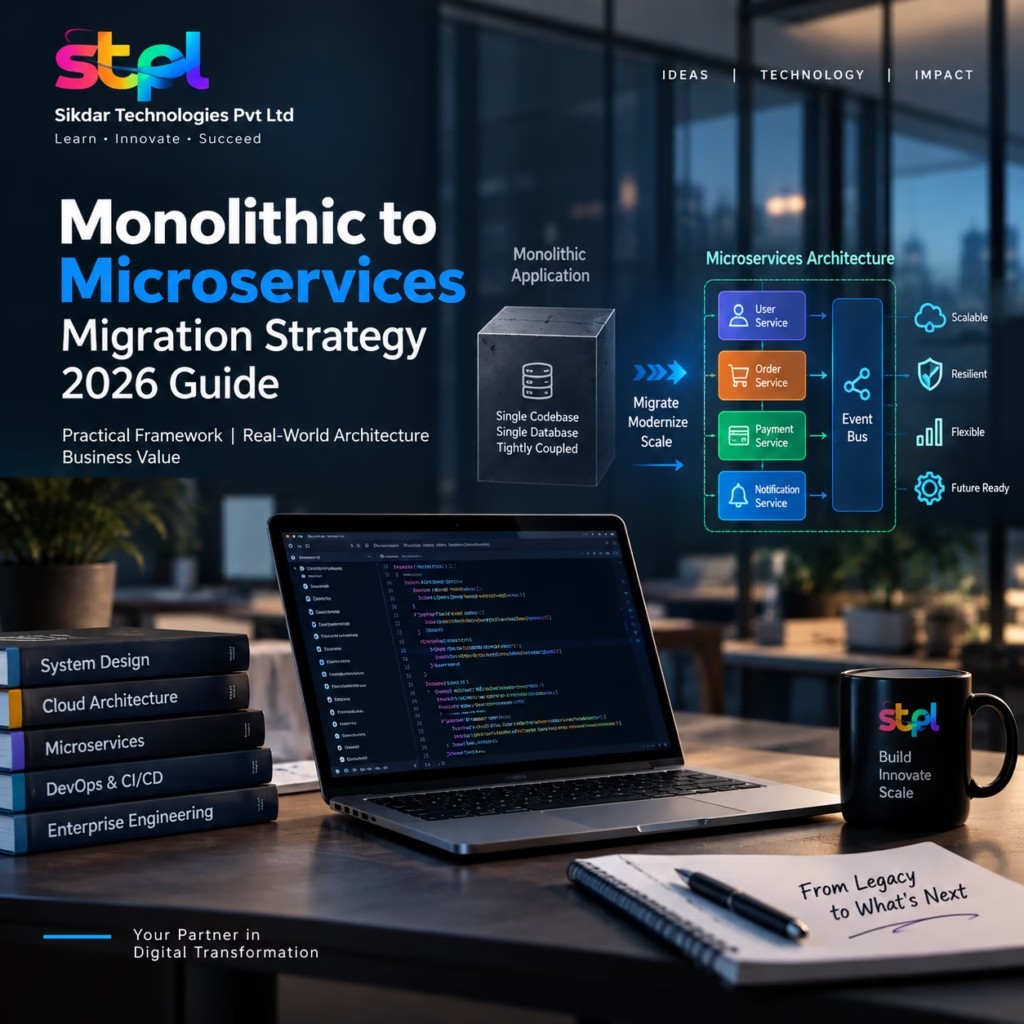
Microservices vs Monolith: The Migration Decision Tree Your application is growing. Response times are slowing down. Your team is stepping on each other’s toes during deployments. Sound familiar? The question keeping CTOs and engineering leaders awake at night: Should we break our monolith into microservices? This isn’t just a technical decision—it’s a business transformation that can either accelerate your growth or create months of costly refactoring. At Sikdar Technologies, we’ve guided dozens of companies through this exact decision, and we’re sharing the framework we use, backed by real performance data from production systems. Understanding the Architecture Battlefield What Is a Monolith? Think of a monolith like a Swiss Army knife—everything you need is in one tool. Your user authentication, payment processing, inventory management, and email notifications all live in a single codebase. When you deploy, you deploy everything at once. For non-technical folks: Imagine your entire business running on one massive Excel spreadsheet with interconnected tabs. Change one formula, and you might affect dozens of other calculations. What Are Microservices? Microservices are like having specialized tools in a workshop. Instead of one Swiss Army knife, you have a dedicated screwdriver, hammer, and saw—each designed for a specific job. Your user authentication service is separate from your payment service, which is separate from your notification service. For non-technical folks: Instead of one massive spreadsheet, you have multiple specialized spreadsheets that communicate through carefully defined connections. Each team can work on their spreadsheet without breaking others. Real Performance Data: What the Numbers Actually Show Let’s cut through the hype and look at actual data from production systems Sikdar Technologies has architected and monitored: Metric Monolith Microservices Winner Deployment Time 15-45 minutes 3-8 minutes Microservices Startup Time 2-5 seconds 0.5-2 seconds Microservices Memory Usage (typical) 2-4 GB 6-12 GB total Monolith Response Time (p95) 180-350ms 120-280ms Microservices Development Setup 15-30 minutes 2-4 hours Monolith Infrastructure Cost $500-2K/month $2K-8K/month Monolith Team Scalability 5-15 developers 15-100+ developers Microservices Key Insight: Neither architecture is universally better. The optimal choice depends on your specific business context, team size, and growth trajectory The Migration Decision Tree: When to Make the Switch At Sikdar Technologies, we use this decision framework with our clients. Answer these questions honestly: 1. Team Size and Structure Stay with Monolith if: Your team has fewer than 10 developers You’re still figuring out product-market fit You need to move fast and iterate constantly Consider Microservices if: You have 15+ developers or multiple teams Teams are blocking each other during deployments Different parts of your app need different expertise (e.g., ML team, payments team) 2. Scale and Performance Requirements Stay with Monolith if: You handle fewer than 100,000 requests per day Your traffic is relatively predictable All features have similar resource requirements Consider Microservices if: You have specific features that need independent scaling (e.g., image processing, video transcoding) You experience unpredictable traffic spikes Some features are resource-intensive while others are lightweight 3. Business and Operational Maturity Stay with Monolith if: You don’t have dedicated DevOps resources Your monitoring and observability tools are basic Downtime costs are low (internal tools, early-stage products) Consider Microservices if: You have mature CI/CD pipelines You have robust monitoring, logging, and tracing systems Even brief outages cost significant revenue Real-World Use Cases: Success Stories from Both Sides Case Study 1: E-commerce Platform (Moved to Microservices) The Challenge: A mid-sized e-commerce company with 50 employees was experiencing 15-minute deployment cycles that blocked all development. Their Black Friday deployments required a complete freeze 48 hours before the event, costing them potential feature releases and bug fixes during their highest-traffic period. The Sikdar Technologies Solution: We implemented a phased microservices migration over six months, identifying seven core services including catalog, cart, checkout, inventory, user accounts, notifications, and search. Each service was extracted methodically with zero downtime. Results After 12 Months: Deployment time reduced from 15 minutes to 4 minutes per service Three teams could deploy independently without conflicts Response time improved by 35% for critical checkout flows Black Friday deployment freeze reduced from 48 hours to 4 hours Infrastructure costs increased by 60%, but revenue per developer increased by 120% Case Study 2: B2B SaaS Platform (Stayed with Monolith) The Challenge: A SaaS startup with 12 developers was experiencing pressure from investors to modernize their architecture. They were convinced microservices were the only path to scalability and asked Sikdar Technologies to lead the migration. The Sikdar Technologies Recommendation: After thorough analysis, we recommended staying with their well-architected monolith. The company was handling 50,000 daily requests comfortably, had no team coordination issues, and was still rapidly iterating on core features. A microservices migration would have consumed six months of development time with minimal business benefit. Our Optimization Strategy: Instead of migrating, we implemented modular monolith principles with clear domain boundaries, improved their CI/CD pipeline, and set up comprehensive monitoring. We established clear triggers for when a microservices migration would become beneficial. Results: Saved six months of development time and $200,000 in infrastructure costs Reduced deployment time from 12 minutes to 3 minutes through pipeline optimization Improved code organization without architectural complexity Team remained focused on customer features instead of infrastructure Benefits Breakdown: What You Gain and What You Trade Monolith Benefits Simplicity: One codebase, one deployment, one server to monitor Performance: No network overhead between components—everything runs in the same process Development Speed: New developers can be productive within days, not weeks Easier Testing: Integration tests run fast because everything is in one place Lower Infrastructure Costs: Typically 50-75% cheaper than equivalent microservices setup Microservices Benefits Team Independence: Teams can deploy on their own schedule without coordination Technology Flexibility: Use Python for ML services, Node.js for real-time features, Go for high-performance APIs Fault Isolation: One service crashing doesn’t bring down your entire application Independent Scaling: Scale your video processing service to 10 instances while keeping user auth at 2 instances Organizational Scalability: Support 50+ developers working simultaneously without conflicts Why Sikdar Technologies for Your Architecture Decision Architecture decisions shape your company’s trajectory for years. Make

google.com, pub-8966458381222183, DIRECT, f08c47fec0942fa0
System Architecture & APIs, Web & Mobile Development

Why Businesses Are Moving to Node.js Microservices in 2025 | Sikdar Technologies

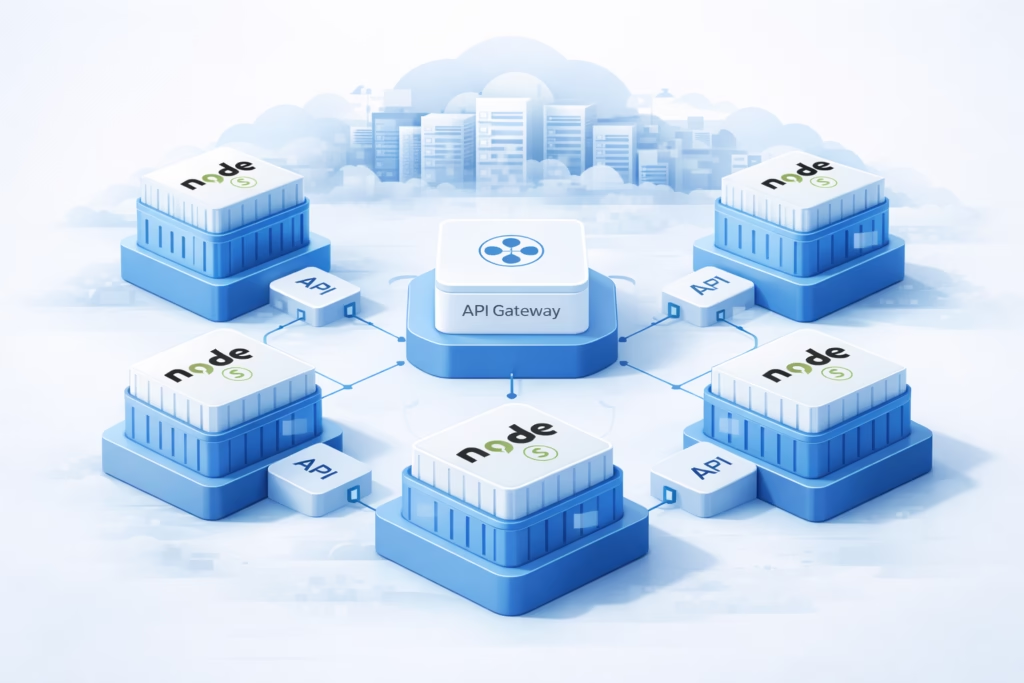
Sikdar Technologies December 16, 2025 5:07 pm Introduction: The Need for Scalable and Flexible System Modern businesses are growing faster than ever—but traditional monolithic software systems are struggling to keep up. As companies scale, they face challenges like slow development cycles, system downtime, difficulty adding new features, and high infrastructure costs. Business owners and technology decision-makers often ask: Why does scaling our application slow down innovation? Why do small changes take so long to deploy? How can we build systems that grow with our business? The answer many businesses are choosing is Node.js microservices architecture. At Sikdar Technologies, we help organizations modernize their systems by adopting microservices powered by Node.js—enabling faster scaling, better performance, and long-term flexibility. What Are Microservices (In Simple Terms)? Microservices architecture breaks a large application into small, independent services. Each service focuses on a single business function and communicates with others through APIs. Instead of one massive system: Each service can be developed, deployed, and scaled independently Failures are isolated, reducing system-wide downtime Teams can innovate faster without impacting the entire application Node.js has become one of the most popular technologies for building these microservices. Why Node.js Is Ideal for Microservices Architecture Node.js is designed for speed, scalability, and efficiency, making it a natural fit for microservices-based systems. Key characteristics include: Event-driven, non-blocking architecture Lightweight runtime Fast API handling Large ecosystem and community support These features make Node.js highly effective for modern, distributed systems. Key Reasons Businesses Are Moving to Node.js Microservices 1. Faster Development and Deployment Node.js microservices allow teams to: Build and deploy features independently Release updates without redeploying the entire system Reduce time-to-market for new products and features This agility is critical for startups and growing businesses competing in fast-changing markets. Sikdar Technologies uses modular development practices to help businesses roll out features faster without disrupting operations. 2. Better Scalability for Growing Businesses In monolithic systems, scaling means scaling the entire application, even if only one part needs more resources. With Node.js microservices: Only high-traffic services are scaled Infrastructure costs are optimized Performance remains stable during traffic spikes This makes Node.js microservices ideal for: Marketplaces SaaS platforms On-demand and real-time applications 3. Improved System Reliability and Uptime In traditional architectures, one failure can bring down the entire system. Microservices reduce this risk: A failure in one service doesn’t crash others Services can be restarted or replaced independently System resilience improves significantly Node.js microservices help businesses maintain higher uptime and better user experiences. 4. Technology Flexibility and Future-Proofing Microservices allow businesses to: Use different technologies for different services Upgrade or replace services without rewriting the entire system Integrate new tools and platforms easily Node.js works seamlessly with: Cloud platforms Containers (Docker, Kubernetes) Modern databases Third-party APIs Sikdar Technologies designs architectures that are flexible and future-ready. 5. Cost Efficiency and Optimized Infrastructure Node.js is lightweight and resource-efficient, which reduces: Server costs Infrastructure overhead Maintenance effort When combined with microservices and cloud infrastructure: Businesses pay only for what they use Systems scale efficiently during demand peaks Operational costs stay under control 6. Ideal for Real-Time and API-Driven Applications Node.js excels in handling: Real-time data processing API-first architectures High-concurrency workloads This makes Node.js microservices perfect for: Fintech platforms Logistics systems Booking and ride-hailing apps Chat, notifications, and live dashboards Real-World Business Use Cases Use Case 1: SaaS Platform Scaling Without Downtime A SaaS business migrated from a monolithic system to Node.js microservices and achieved: Faster feature rollouts Zero-downtime deployments Improved system performance during peak usage Use Case 2: Marketplace Handling High Traffic Volumes An online marketplace used Node.js microservices to: Scale product search independently Handle payment processing securely Improve checkout speed and reliability Use Case 3: Enterprise System Modernization An enterprise replaced legacy systems with Node.js microservices and experienced: Reduced maintenance costs Improved integration with third-party tools Better monitoring and control Sikdar Technologies supports similar transitions by aligning architecture decisions with business goals. Benefits of Node.js Microservices for Businesses Faster Innovation Independent services allow teams to experiment and improve without risk. Higher Performance Node.js handles concurrent requests efficiently, ensuring smooth user experiences. Reduced Risk Failures are isolated, minimizing system-wide impact. Easier Maintenance Smaller codebases are easier to manage and update. Long-Term Scalability Systems grow alongside business needs without costly rewrites. Common Concerns (And How to Address Them) “Microservices Are Too Complex” With the right architecture and tools, complexity is manageable. Sikdar Technologies provides structured planning and implementation. “Is Node.js Secure?” When built correctly, Node.js microservices are secure and widely used by global enterprises. “Is This Right for My Business?” Microservices are ideal for businesses planning growth, high traffic, or continuous innovation. Why Choose Sikdar Technologies for Node.js Microservices What Makes Us Different? Business-Driven ArchitectureWe design systems around your business workflows—not just code. Microservices ExpertiseProven experience in scalable Node.js architectures. Cloud & DevOps IntegrationEnd-to-end deployment, monitoring, and optimization. Custom SolutionsNo generic templates—everything is tailored. Long-Term SupportFrom planning to scaling, we stay with you. Sikdar Technologies builds systems that are not just modern—but sustainable. How to Know If Your Business Is Ready for Microservices Ask yourself: Are feature updates slowing us down? Are traffic spikes causing performance issues? Is system maintenance becoming costly? Do we plan to scale significantly in the next 1–2 years? If yes, Node.js microservices may be the right move. Conclusion: Microservices Are a Strategic Business Decision In 2025, microservices are no longer just a technical trend—they are a business strategy. Node.js microservices help organizations: Scale faster Reduce operational risk Innovate continuously Stay competitive With the right partner, this transition becomes smooth and highly rewarding. Sikdar Technologies is ready to help you design and implement Node.js microservices that power real business growth. Planning to Move to Node.js Microservices? Partner with Sikdar Technologies to modernize your system without disrupting your business. Schedule a Free Consultation

Powering Ideas, Shaping Futures

contact@sikdartechnologies.com

project@sikdartechnologies.com

© 2025 Sikdar Technologies Pvt Ltd