
Claim Your FREE Website Audit—Limited Time Offer | Contact Us NOW!

Uncategorized

Cloud & DevOps, Odoo ERP & Business Systems, Software Development, Uncategorized

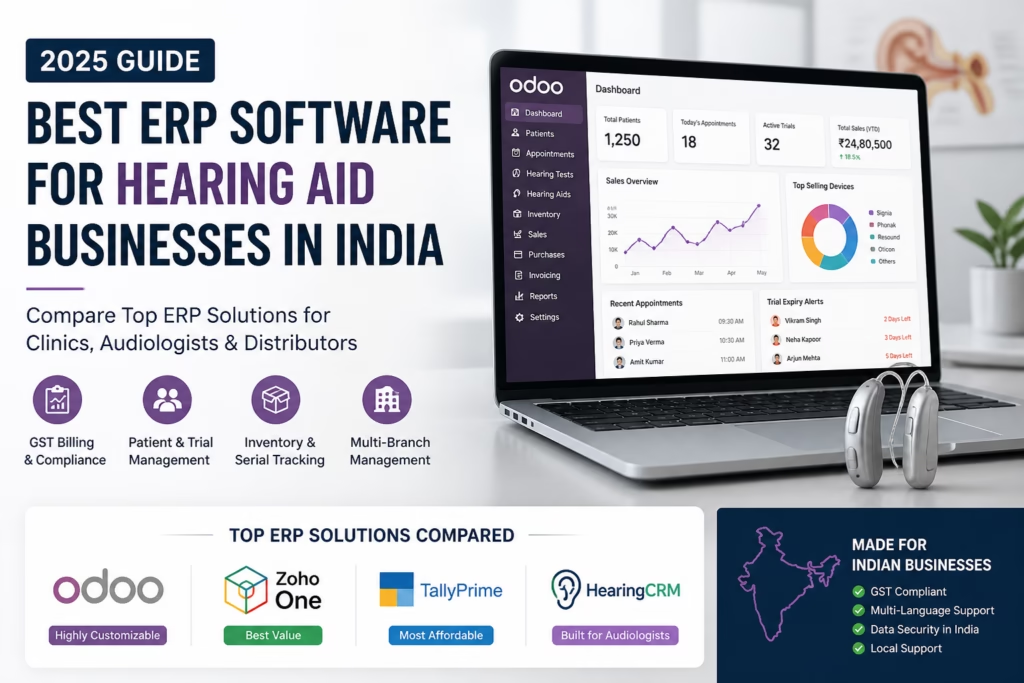
Best ERP Software for Hearing Aid Business India (2025 Guide)

Best ERP Software for Hearing Aid Clinics in India (2025) – Top 5 Compared Best ERP Software for Hearing Aid Businesses in India (2025) 🇮🇳 India Edition · 2025 Guide Best ERP Software forHearing Aid Businesses Cut inventory errors, automate patient follow-ups, and scale your clinic with the right ERP — built for India. View Top Picks → Compare Features Why ERP? Benefits Comparison Top Picks FAQ The Problem Managing a Hearing Aid Clinic Is Complex Without the right tools, clinics across India lose revenue daily to manual errors, stock mismatches, and missed patient follow-ups. 📦 Inventory Blind Spots No real-time stock visibility means orders get delayed or duplicated, costing thousands every month. 💸 Revenue Leakage Untracked discounts and manual billing result in consistent revenue loss across branches. 📅 Missed Follow-ups Patients forget trial period ends and device servicing — and without automation, so does your clinic. 📊 No Business Insights Spreadsheets can’t show which device sells most, who your top audiologist is, or your real margins. 43%revenue lost via manual billing errors 2.3×faster patient processing with ERP ₹8L+avg. annual savings post-implementation 68%clinics plan ERP adoption by 2026 The Solution Life Before vs. After ERP See how ERP transforms day-to-day clinic operations from the ground up. ❌ Without ERP ✖ Stock counted manually each week ✖ Patient files stored in physical folders ✖ Follow-up reminders missed regularly ✖ GST billing done separately in Tally ✖ No visibility into staff performance ✖ Multi-branch coordination via WhatsApp ✅ With ERP ✔ Real-time inventory with auto reorder alerts ✔ Digital patient records with full audit trail ✔ Automated SMS/email follow-up campaigns ✔ GST-compliant invoicing built right in ✔ Live dashboards and KPI tracking ✔ Unified view across all branches Side-by-Side ERP Feature Comparison We evaluated the top platforms on features critical to hearing aid clinics in India. Feature Odoo ERP Zoho One Tally Prime HearingCRM Inventory Management ✔ ✔ ✖ ✔ Appointment Scheduling ✔ ◑ ✖ ✔ GST Billing (India) ✔ ✔ ✔ ✔ Patient CRM ◑ ✔ ✖ ✔ Multi-Branch Support ✔ ✔ ◑ ✔ Automated Follow-ups ✔ ✔ ✖ ✔ Trial Period Tracking ◑ ✖ ✖ ✔ Mobile App ✔ ✔ ◑ ◑ Open Source / Self-host ✔ ✖ ✖ ✖ Starting Price (India) ₹8,000/mo ₹5,500/mo ₹1,800/mo ₹12,000/mo ✔ Full support  ◑ Partial  ✖ Not available  · Pricing indicative for small clinics. Editor’s Picks Top ERP Platforms for 2025 Recommendations based on feature depth, India compliance, pricing, and real-world usability. 🏆 Best Overall Odoo ERP Best for scalability & full customisation Odoo is a fully modular, open-source ERP that can be tailored precisely for hearing aid workflows — audiogram records, device warranty tracking, and India-localized GST. Its self-hosting option makes it ideal for growing multi-branch clinics that want complete data control. Open SourceMulti-Branch GST ReadySelf-HostableAPI Access ₹8K/ month onwards Zoho One Best for small & growing clinics Zoho One bundles CRM, invoicing, email campaigns, and analytics in one subscription. Easy to set up without IT help, integrates well with WhatsApp, and is loved by independent hearing aid dealers looking for an affordable all-in-one suite. Easy SetupWhatsApp CRM 40+ AppsCloud-First ₹5.5K/ month onwards Tally Prime Best for accounting-only needs Tally remains India’s most trusted accounting software — unbeatable for GST compliance, payroll, and financial reporting. It lacks CRM depth for hearing aid businesses, but if your patient management is handled elsewhere, Tally is solid and CA-friendly. GST ExpertPayroll Offline FirstCA Friendly ₹1.8K/ month onwards HearingCRM Best industry-specific solution Built exclusively for audiology and hearing aid businesses — audiogram storage, trial period management, device serial number tracking, and warranty reminders out-of-the-box. Niche, but the most feature-complete option for specialized clinic chains. Audiogram RecordsTrial Tracking Warranty AlertsNiche Built ₹12K/ month onwards Common Questions Frequently Asked Questions Everything clinic owners ask before making the switch to ERP. Which ERP is best for a single-branch clinic in India? + Zoho One is ideal for single-branch clinics — it offers the best balance of affordability and features, including CRM, billing, and basic inventory, all accessible from a mobile app without any technical setup. How much does ERP implementation cost in India? + Cloud solutions like Zoho start from ₹5,500/month with minimal setup fees. Custom Odoo implementations typically involve ₹50,000–₹2,00,000 in one-time setup costs plus ₹8,000–₹20,000/month in licensing. Is Tally enough for managing a hearing aid business? + Tally is excellent for GST compliance and accounting but lacks patient CRM, appointment scheduling, and hearing aid-specific inventory management. A unified ERP is more efficient long-term. Can ERP help with trial period management for hearing aids? + Yes — platforms like HearingCRM and customized Odoo setups can track individual device trial periods, send automated patient reminders, and notify staff when trials are expiring. This directly reduces device return losses. How long does ERP implementation take? + Cloud ERPs like Zoho can go live in 1–2 weeks. A full Odoo implementation with custom modules typically takes 4–10 weeks depending on clinic size and data migration complexity. Is my patient data safe in a cloud ERP? + Reputable ERPs use enterprise-grade AES-256 encryption and comply with India’s IT Act standards. Odoo’s self-hosting option lets you run the entire system on your own servers if data sovereignty is critical. Ready to Modernise Your Clinic? Book a free consultation and we’ll help you choose the right ERP — no pushy sales, just honest advice tailored to your business. Book a Free Demo →
google.com, pub-8966458381222183, DIRECT, f08c47fec0942fa0
AI & Automation, Business & Digital Strategy, Uncategorized

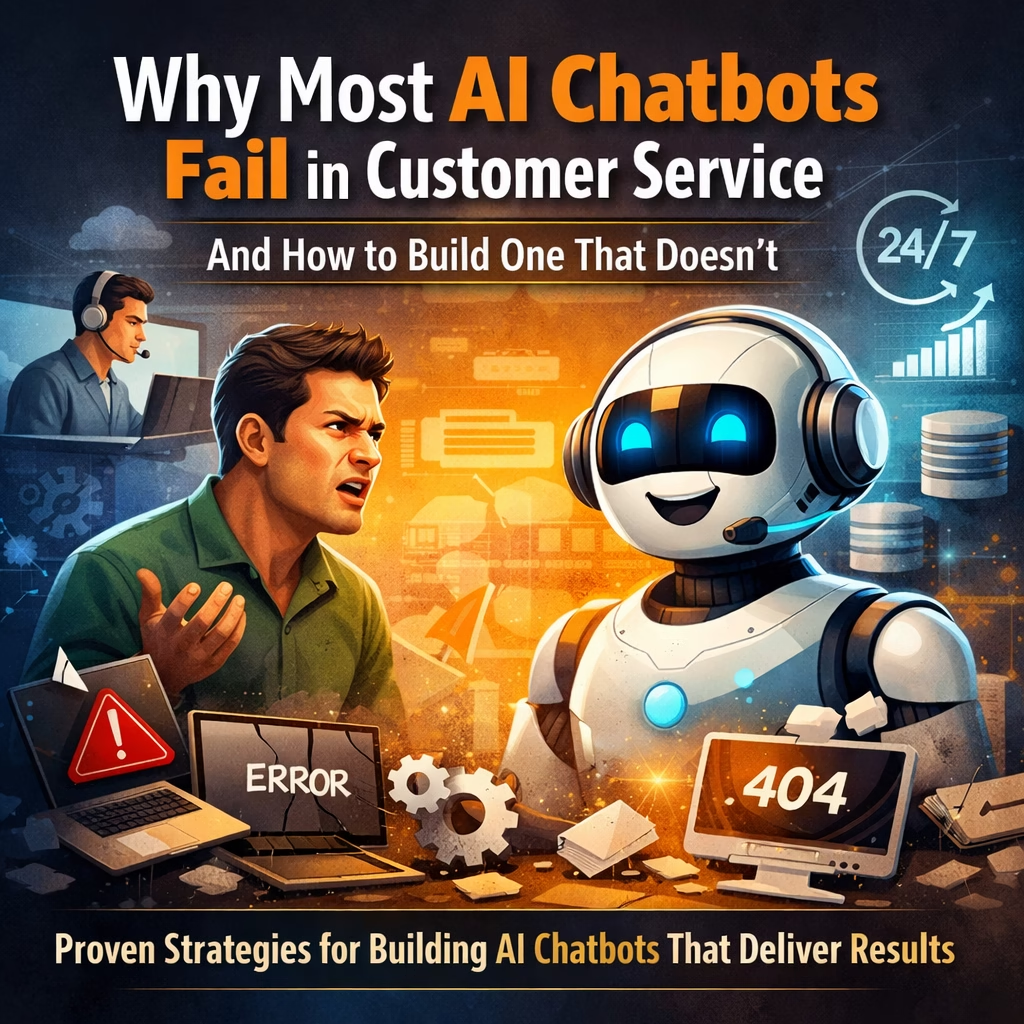
Why AI Customer Service Chatbots Fail and the Framework That Actually Works

Why Most AI Chatbots Fail in Customer Service (And How to Build One That Doesn’t) Real-world problems, proven solutions, and a practical framework for building AI customer service chatbots that actually work The promise of AI chatbots in customer service is compelling: 24/7 availability, instant responses, reduced operational costs, and improved customer satisfaction. Yet the reality often falls short. According to recent industry data, 75% of customers report frustration with chatbot interactions, and 40% of AI chatbot implementations fail to meet business objectives within the first year. This disconnect between promise and performance isn’t because AI technology is fundamentally flawed. The problem lies in how these systems are designed, implemented, and integrated into actual business operations. After deploying dozens of successful AI chatbot solutions, we’ve identified the critical failure patterns and, more importantly, the proven strategies to avoid them. In this comprehensive guide, we’ll examine real-world chatbot failures, dissect what went wrong, and provide actionable solutions that work. Whether you’re considering your first chatbot implementation or looking to fix an underperforming system, this guide offers practical insights based on actual customer service challenges, not theoretical concepts. The Reality Check: Why Traditional Chatbot Approaches Fall Short AI customer service chatbots promise 24/7 availability, faster responses, and lower support costs. However, in practice, many implementations fall short of expectations. In fact, a majority of businesses report that their AI chatbot initiatives fail to deliver meaningful results. This failure is not due to weak technology. Instead, it happens because chatbots are often designed, deployed, and maintained without aligning them to real customer behavior and business workflows. To understand how to build an AI customer service chatbot that actually works, we must first examine why most of them fail. The Reality Check: Why AI Customer Service Chatbots Fail Before jumping into solutions, it’s important to understand the real reasons AI customer service chatbots fail. These are not theoretical limitations. Rather, they are practical problems that frustrate customers, overload support teams, and reduce trust in automation. Problem 1: The Rigid Script Trap Real-World Scenario An e-commerce company launches a chatbot to handle order inquiries. A customer asks: “My package was supposed to arrive yesterday, but it’s not here. What’s going on?” The chatbot responds: “Would you like to track your order? Please provide your order number.” The customer, already frustrated, replies: “I already told you it was supposed to arrive yesterday. Where is it?” However, the chatbot repeats the same scripted response. As a result, the conversation goes nowhere. Why This Happens Traditional chatbots rely on rule-based decision trees. Because of this, they cannot understand context, emotional tone, or conversational flow. When customers phrase questions differently than expected, the chatbot fails. Consequently, users are forced to repeat themselves or abandon the interaction. The Solution A modern AI customer service chatbot uses natural language processing (NLP) to understand intent rather than keywords. Instead of following scripts, it recognizes what the customer wants to achieve. In this case, an intelligent chatbot would detect a delivery delay, pull tracking details automatically, and explain the next steps—while acknowledging customer frustration. Implementation approach:Train your chatbot on real customer conversations. Use intent classification models capable of identifying 30–50 core customer intents. Additionally, design flexible conversational flows that handle follow-up questions naturally. Problem 2: The Knowledge Gap Real-World Scenario A SaaS company deploys a chatbot to answer product questions. A prospective customer asks about integrations. The chatbot responds with a generic message and links to a webpage. When the customer asks specifically about Salesforce and HubSpot, the chatbot repeats the same response. Frustrated, the customer leaves. Why This Happens Many AI chatbots fail because they are disconnected from business knowledge systems. Instead of acting as an intelligent interface, they operate as limited FAQ tools. As a result, they cannot access product documentation, CRM data, or integration details. The Solution Successful AI customer service chatbots integrate deeply with the company’s knowledge ecosystem. This includes documentation, CRM platforms, helpdesk systems, and historical support data. Implementation approach:Use retrieval-augmented generation (RAG) so the chatbot can search and synthesize information in real time. Maintain version control and automated updates to ensure responses remain accurate as products evolve. Problem 3: The Handoff Disaster Real-World Scenario A customer spends several minutes troubleshooting an issue with a chatbot. When the chatbot fails, the customer requests a human agent. Unfortunately, the agent has no context and asks the customer to explain everything again. At this point, the customer is ready to switch providers. Why This Happens This problem occurs when chatbots and human support systems are poorly integrated. Conversation history is lost, attempted solutions are not logged, and agents lack context. As a result, customer frustration increases and resolution times skyrocket. The Solution Effective AI customer service chatbots enable seamless human handoff. When escalation occurs, the chatbot must transfer the full conversation history, customer sentiment, attempted fixes, and account details. Implementation approach:Integrate the chatbot with platforms like Zendesk, Freshdesk, or Intercom. Define escalation rules based on confidence, complexity, and customer sentiment. Most importantly, ensure agents receive actionable summaries before engaging. Problem 4: The Personality Vacuum Real-World Scenario A banking customer writes: “Why was my card declined? This is embarrassing.” The chatbot replies: “Transaction declined. Insufficient funds. Check balance.” Although accurate, the response lacks empathy and damages trust. Why This Happens Many chatbots are built with functional efficiency only, ignoring emotional intelligence. As a result, they sound robotic and fail to reflect brand voice or customer expectations. The Solution An effective AI customer service chatbot understands emotional context. It acknowledges frustration, explains the issue clearly, and offers helpful options. Implementation approach:Define chatbot personality guidelines aligned with your brand. Train sentiment detection models and test conversations with real users to ensure responses feel human and supportive. Problem 5: The Update Nightmare Real-World Scenario A software company updates its pricing, but the chatbot continues providing outdated information for weeks. Customers receive incorrect quotes, leading to lost deals and reduced credibility. Why This Happens Chatbots often rely on static knowledge bases that are not

Powering Ideas, Shaping Futures

contact@sikdartechnologies.com

project@sikdartechnologies.com

© 2025 Sikdar Technologies Pvt Ltd